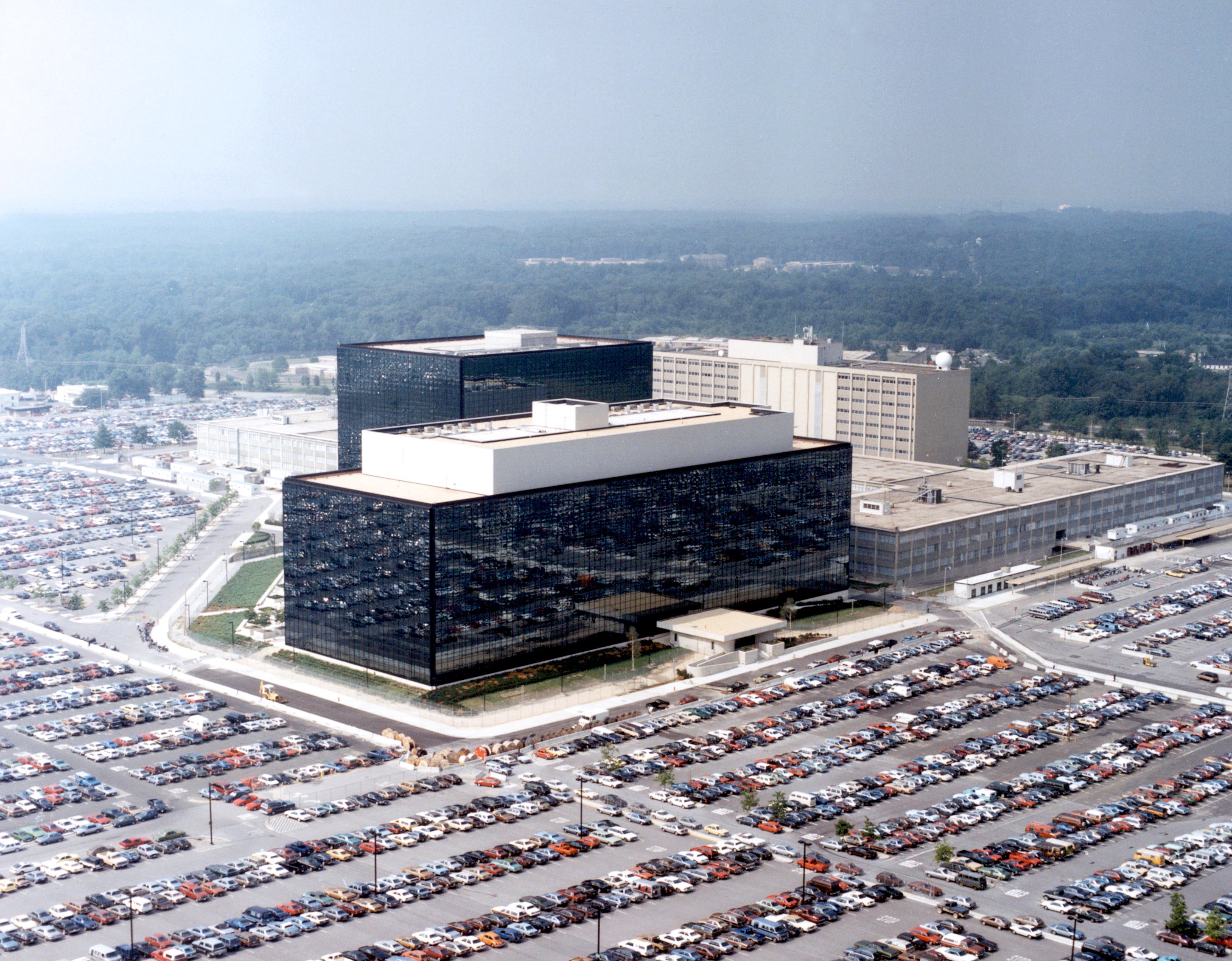
The FBI contributed 56 records to the first PURSUE release on May 8, 2026. That is the second-largest agency contribution in the tranche, behind only the Pentagon's 82 files. FBI Director Kash Patel announced the handover publicly on May 6, two days before the release, making it the first public acknowledgment that the Bureau held classified UAP materials at that scale.
The 56 files span civilian witness interviews, drone operator reports, infrared images, and accounts dating from the 1940s through late 2025. Within that range, one document stands apart. It is a 13-page AARO slide deck, sourced from FBI witness interviews, that AARO itself has described as "among the most compelling within AARO's current holdings." It documents what seven federal law enforcement special agents reported over two consecutive days in the western United States in 2023.
This article focuses on what the FBI's PURSUE records actually contain, how they relate to the longer pattern of Bureau involvement in UAP investigation, and what the geographic distribution of incidents tells us when you look across multiple decades of cases.
The Western US Event: What the Document Says
Seven FBI special agents were operating in the western United States in 2023. They were working in three two-person teams, with a seventh agent whose specific role in the incident is not detailed in the released material. Over two consecutive days, across independent observation positions, these agents reported four distinct categories of sightings. The reports were documented using FBI Form 302, the Bureau's standard witness interview format, the same form used in federal criminal investigations.
The first category involved large orange orbs appearing in the sky at dusk and emitting groups of smaller red orbs. Six of the seven agents, across all three teams, independently reported this. The orange orbs appeared, released groups of two to four smaller red objects, and then disappeared. This sequence occurred at least five times during the two-day period. The teams were positioned at different vantage points. The AARO document does not establish whether a single object was responsible for multiple sightings or whether multiple distinct objects were present.
The second category is a large stationary glowing orb. The AARO document reproduces the witness's own description: "the Eye of Sauron from Lord of the Rings, except without the pupil, or maybe an orange Storm Electrify bowling ball." This language appears in the actual document. It is worth holding onto it for a moment, not because the reference is obscure, but because it tells you something about how the witness was trying to communicate scale and visual quality to an investigator who was not present. The orb was large enough and visually distinctive enough that an adult professional reached for a fantasy film comparison to convey it accurately.
The third category is a ground-level pursuit. Agents followed an object displaying one red and one white light, approximately two to three feet above the ground. When they closed to within a few hundred feet of it, the object moved off the road into open desert, maintaining its height relative to the ground, holding its orientation relative to the observers, and traveling at 15 to 20 miles per hour. It did not accelerate dramatically or disappear. It moved. The agents followed until they lost it.
The fourth category covers additional varied observations by the same agents that the AARO document describes more briefly.
Why the Form 302 Documentation Matters
FBI Form 302 is not a casual reporting tool. It is the Bureau's formal witness interview record, used in federal criminal investigations, counterintelligence cases, and national security matters. The form requires the interviewing agent to document what a witness said, when, where, and under what circumstances. It is admissible in federal proceedings. When the FBI documents UAP witness accounts using Form 302, it is applying its standard evidentiary framework to the testimony.
The witnesses in the Western US Event are not civilians. They are federal law enforcement special agents. Their reports were taken by other agents using the Bureau's own documentation protocol. The institutional chain of custody for this testimony is clear and formal. That does not make the accounts definitive. It does mean they carry a different evidentiary weight than an anonymous social media post or an informal interview with a civilian witness who may have limited observation training.
AARO's characterization of this document as "among the most compelling within AARO's current holdings" is consistent with that evidentiary framework. Seven trained federal observers, three independent teams, consistent reports across multiple sightings, and a two-day duration that allowed for repeated observation under varying conditions. Whatever was in the western United States in 2023, it was observed systematically by people whose professional function is accurate observation and documentation.
The Helicopter Near-Miss and Recent Infrared Images
A separate FBI record documents a senior U.S. intelligence official's account of a close-range encounter with objects detected on infrared systems. The objects came within approximately ten feet of a helicopter during an aerial search. They traveled roughly 20 miles at speeds the helicopter could not match, then made an abrupt directional change and accelerated away. The observer described the object splitting into multiple lights, followed by additional orbs forming repeated patterns of four to five glowing objects appearing and disappearing in cycles lasting approximately 30 minutes.
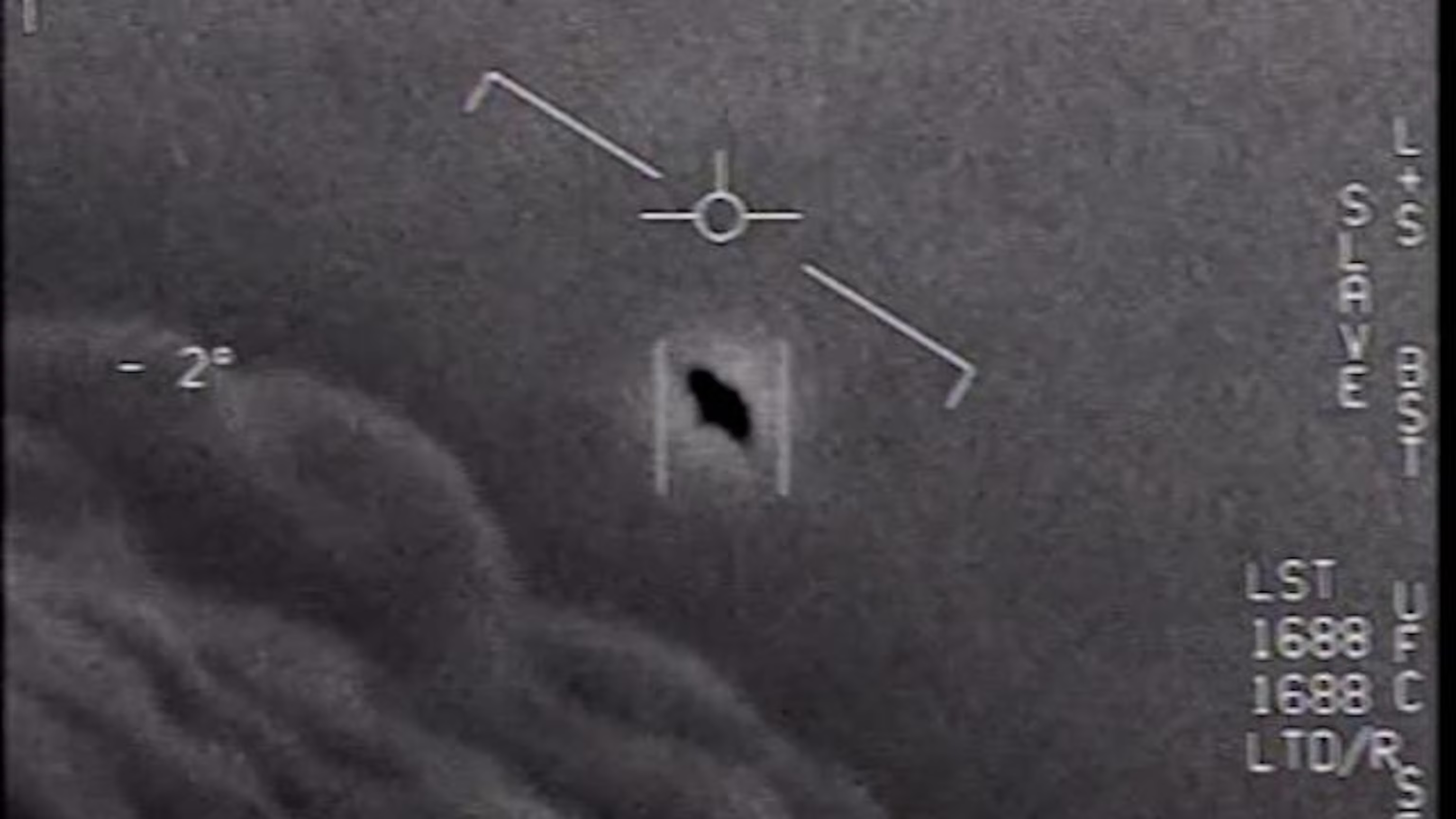
The PURSUE release also includes infrared still images captured by the FBI showing unidentified objects over the western United States in September 2025 and December 2025. These are not historical files. They are recent, created within six months of the release date. No identification was provided for either image set. Their inclusion in the first PURSUE tranche, rather than being withheld for future releases, suggests they were judged to be relevant context for the patterns visible in older materials.
The Contact Protocol Work
The western US patterns in the PURSUE files are exactly the kind of anomalous contact record that structured consciousness protocols are designed to work with. Psionic Training's contact protocol curriculum is built on documented methodologies for this work.
Explore Contact Protocols →The Historical Record and the FBI's Actual Role
The FBI's involvement in UAP investigation is older than most people realize, and it has been consistently mischaracterized in both directions. It is not a coverup institution sitting on definitive answers. It is also not a credulous organization that chased flying saucer rumors. Its role has been documentation: collecting formal witness accounts, tracking incidents near sensitive infrastructure, and handing off to other agencies when the matter crossed into military airspace or classified territory.
The Bureau's best-known UAP document is the Guy Hottel memo, dated March 22, 1950, sent by the Special Agent in Charge of the Washington Field Office to Director Hoover. It reports, thirdhand, that three craft and their occupants had been recovered in New Mexico. The FBI has stated explicitly, repeatedly, that it never investigated this claim and that the memo was a secondhand account of an unverified rumor. The FBI's own website addresses this directly. The Hottel memo remains the most-viewed document in the FBI's public Vault, demonstrating that public appetite for this material bears no relationship to the material's evidentiary quality.
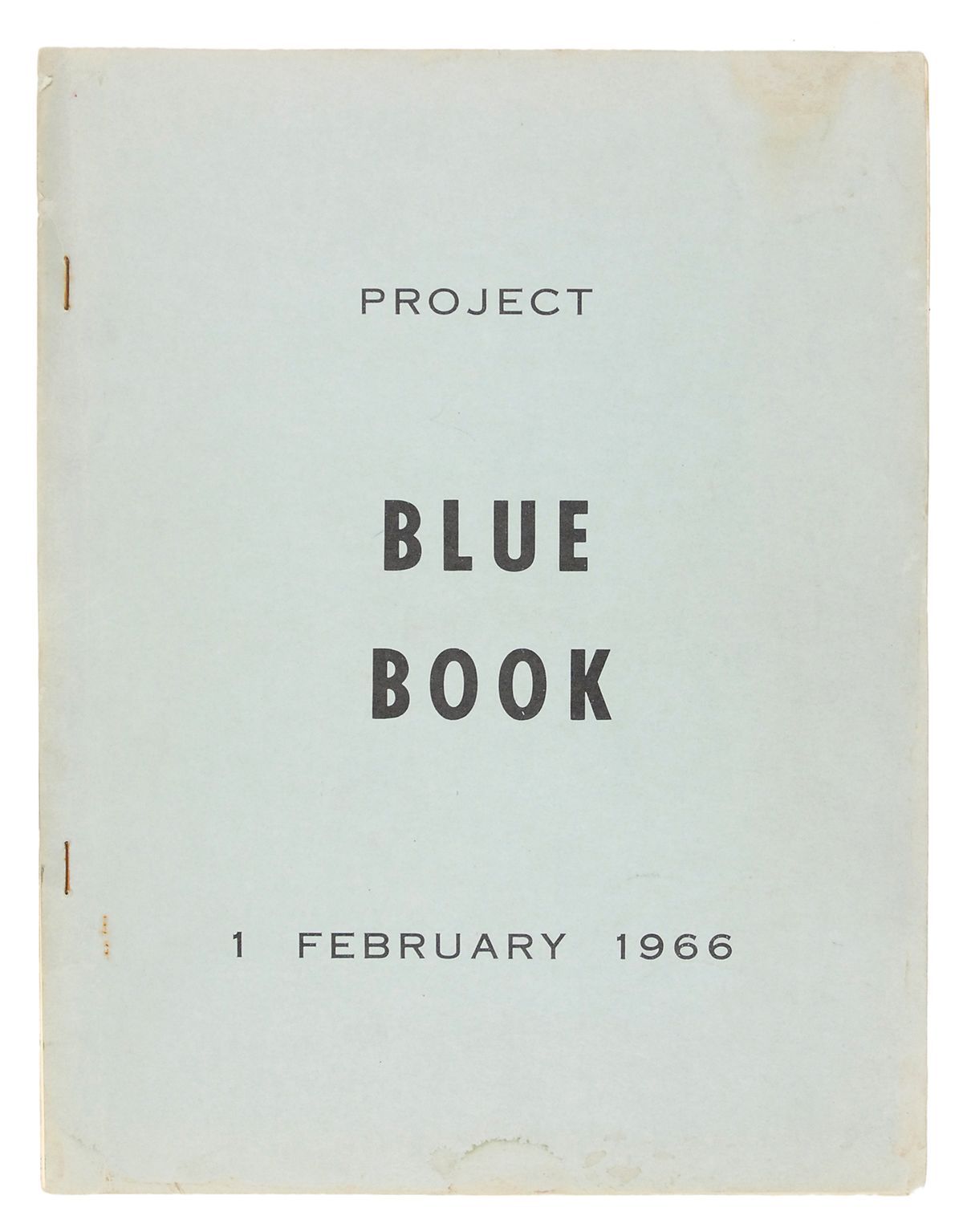
Four months after the Hottel memo, in July 1950, the FBI ended its practice of verifying UAP sightings. Director Hoover transferred investigation responsibility to the U.S. Air Force, which ran Project Sign, then Project Grudge, then Project Blue Book. From that point, the FBI's role became referral and documentation of incidents with potential domestic security implications, particularly those involving nuclear facilities and military installations.
A 1966 FBI field office memo from San Francisco, included in the PURSUE release, contains witness accounts describing figures of three and a half to four feet tall wearing what appeared to be space suits and helmets. The files carry no conclusion about extraterrestrial origin. They document what was reported. That is the FBI's function in this record: documentation, not interpretation.
The Nuclear Facility Pattern
Across the full PURSUE archive, including both releases and the prior AARO annual reports that provide context, the strongest documented geographic pattern is concentration around nuclear infrastructure. This pattern is not new. It appeared in the earliest classified UAP investigation records and has been consistently present through seven decades of case accumulation.
PURSUE Release 2, on May 22, 2026, added a 116-page document from the Armed Forces Special Weapons Program, the successor to the Manhattan Project, covering 209 reports of green orbs, discs, and fireballs near Sandia, New Mexico between 1948 and 1950. The AFSWP document also includes investigations into copper powder found at some sites, an unusual physical trace element. An August 1950 FBI memo confirms that more than 150 sightings were recorded in New Mexico over two years around the atomic laboratories.
This nuclear facility clustering continued through the Cold War period. Malmstrom Air Force Base in Montana, which houses nuclear intercontinental ballistic missiles, has one of the longest UAP case histories of any U.S. military installation, spanning documented incidents from the 1960s through recent years. AARO's FY2024 consolidated annual report, which covers 757 UAP reports received between May 2023 and June 2024, attributes part of the geographic distribution to "continued geographic collection bias based on locations near U.S. nuclear infrastructure, weapons and launch sites."
AARO's own framing uses the word "bias" carefully. Collection bias means incidents near nuclear facilities are more likely to be reported and documented than incidents in remote areas with no institutional observers. It does not necessarily mean the incidents are more frequent. Disentangling genuine geographic concentration from reporting density is a real methodological challenge that the PURSUE releases do not resolve.
What the pattern does establish is that if you are looking for UAP activity in the United States, the western states, specifically the areas around New Mexico, Nevada, and Montana with significant nuclear and military infrastructure, have produced the most formally documented cases across the longest time period. The 2023 Western US Event with seven FBI agents, the September and December 2025 infrared images, and the helicopter near-miss all fit geographically within this longer pattern.
AARO's Geographic Concentration Data
Beyond the domestic nuclear pattern, AARO's FY2024 annual report identifies four broad geographic concentrations globally: the southeastern United States and Gulf of Mexico; the West Coast and Pacific Northwest; the Middle East; and northeastern Asia near Japan and the Korean Peninsula. The common thread in all four is proximity to active U.S. military presence and operations.
AARO is appropriately cautious about this. The concentrations partly reflect where U.S. sensor systems are deployed, where military personnel are trained to observe and report, and where incidents involving U.S. assets are most likely to generate formal documentation. A UAP event over central Africa in 2022 would not appear in AARO's database unless it involved U.S. personnel or equipment. The data reflects U.S. operational geography as much as it reflects actual incident distribution.
That caveat acknowledged, the western U.S. concentration specifically has held across sources that are independent of each other: AFSWP records from 1948-1950, FBI field memos from the 1960s, AARO reports from 2023-2025, and FBI Form 302 interviews from 2023. When independent agencies using different documentation frameworks across seven decades consistently point to the same geography, the collection bias explanation becomes harder to sustain as a complete account.
The Disinformation Problem
Any serious engagement with the FBI's PURSUE contribution has to acknowledge the contamination risk. DefenseScoop's May 14 assessment raised it directly: the U.S. government ran documented programs in the 1950s that deliberately manufactured UAP records as cover for classified weapons and surveillance programs. Some of those fabricated files circulated in the public record for decades and have since been released through FOIA in ways that made them indistinguishable from genuine anomaly reports.
The FBI files from the 1940s and 1950s are the most vulnerable to this contamination. The Hottel memo, for instance, is exactly the kind of document that could have been circulated deliberately: third-hand, unverifiable, tied to no specific agency or named witness, but specific enough to seem credible. The FBI itself has never been able to trace the original source of the claim it describes.
The 2023 Western US Event, the helicopter near-miss, and the 2025 infrared images are all substantially less vulnerable to this problem. They involve identified personnel, formal documentation, and institutional chains of custody that would be difficult to fabricate retroactively. But the PURSUE archive as a whole does not distinguish between files in which that chain exists and files in which it does not. A reader working through the 56 FBI records has to apply that judgment case by case.
What Comes Next
The FBI's participation in PURSUE is ongoing. Director Patel's May 6 announcement described the initial handover as the first batch, implying more will follow. What additional records the Bureau holds, and how recent they are, is not publicly known. Given that the most recent files in Release 1 are from December 2025, it is reasonable to expect that ongoing collection continues in parallel with the disclosure process.
For researchers, the most actionable material from the FBI files is the Western US Event documentation. The Form 302 evidentiary chain is clear. The witnesses are federal professionals. The AARO characterization as "among the most compelling in current holdings" is the government's own assessment of the material's quality. If you are building a research framework for understanding recent UAP activity in the United States, this document is primary source material that should be in it.
The broader pattern across nuclear facilities and the western United States adds context that makes the Western US Event less anomalous and more part of a long, consistent record. Whether that record reflects genuine geographic concentration of phenomena, collection bias from institutional observation density, or something else is a question PURSUE has raised more sharply than it has answered. That is the honest state of the evidence.
The government's decision to release these records formally, rather than waiting for FOIA requests or leaks, suggests it has concluded that the institutional cost of continued silence on this material exceeds whatever risk it sees in disclosure. That judgment, from an institution that spent decades actively suppressing this record, is itself a data point worth taking seriously.
For the research community working at the intersection of anomalous cognition and UAP contact, the FBI's PURSUE files add something the STARGATE archive established and the contact protocol literature has long argued: these phenomena are geographically patterned, temporally persistent, and observed by trained personnel under conditions that produce formal institutional records. That is a different research situation than anecdote and rumor. PURSUE is making it more different still.
Share this analysis

The research continues. So does the training.
The PURSUE files document phenomena that structured remote viewing protocols were designed to investigate. The same government that compiled these records also developed and validated the training methods. Psionic Training is built on those methods.
Begin Training →PURSUE File Alerts
Get notified when new PURSUE tranches drop, plus our analysis of each release. No noise.