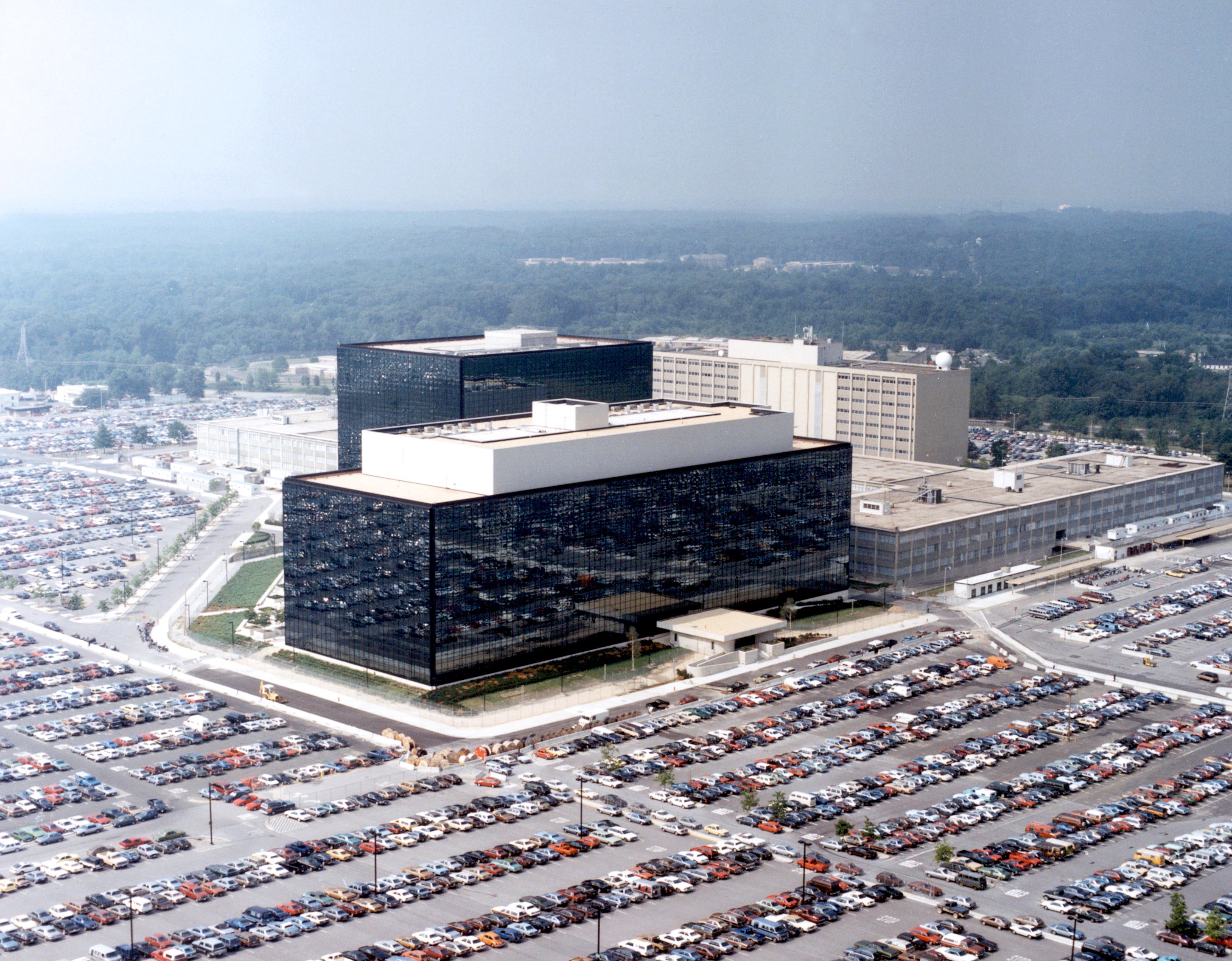
When the CIA released the CREST database in January 2017, the resulting coverage mostly followed one of two tracks: either it was a story about government credulity — tax money spent on psychics — or it was a story about suppressed proof of paranormal phenomena. Both framings treat 12,473 separate documents as a single thing with a single meaning. They don't.
The archive is a collection of records produced over 23 years by multiple agencies, multiple contractors, multiple research programs operating under different names and different methodologies. Reading it as a unified document misses what makes it interesting: the internal disagreements, the shifting protocols, the moments where the researchers themselves were not sure what they were looking at.
How to Actually Find Things in It
The program changed names multiple times before it became STARGATE in 1991. The earlier files are organized under preceding code names: SCANATE (the initial CIA program from 1972), GONDOLA WISH, GRILL FLAME, CENTER LANE (military intelligence programs from the late 1970s and early 1980s), and SUN STREAK (the DIA program from 1985 to 1991).
The CIA's own reading room at cia.gov/readingroom/collection/stargate has 12,473 source documents, though the .tif image format makes them difficult to search. Researcher John Greenewald converted all 89,901 pages into searchable PDFs at theblackvault.com — the most accessible version for sustained reading. The Internet Archive hosts the full browsable dataset at archive.org/details/STARGATEDataset.
A Practical Guide to Navigating the CREST Database
The CREST system (CIA Records Search Tool) is the CIA's primary electronic database for declassified records. It is not user-friendly. The search interface is basic, results are returned as scanned .tif images with no OCR, and there is no consistent filing system across the Stargate collection. Documents were scanned from physical folders that were themselves organized by different agencies at different times under different classification schemes.
The most productive approach is to use Greenewald's converted PDFs on The Black Vault and search by keyword. If you are looking for specific sessions, search by viewer codenames (such as the cryptonyms used in session logs) or by the date ranges corresponding to specific program phases. SCANATE materials date from 1972 to roughly 1976. GONDOLA WISH and GRILL FLAME records cover the late 1970s. CENTER LANE runs from 1983 to 1985, SUN STREAK from 1985 to 1991, and STARGATE proper from 1991 to 1995.
Another useful technique: search for the names of the SRI researchers (Harold Puthoff, Russell Targ, Edwin May) or for the military program managers (Fred Atwater, Skip Atwater, Dale Graff). Their names appear on memos, evaluation reports, and correspondence that provides context the raw session transcripts lack.
Categories of Documents in the Archive
The archive is not a single type of document repeated 12,000 times. It breaks down into several distinct categories, and understanding what you are reading matters as much as reading it.
Session transcripts make up the largest portion. These are records of individual remote viewing sessions, typically including the target coordinates or tasking information, the viewer's raw impressions (often handwritten or dictated), any sketches produced during the session, and a monitor's notes. Some include post-session analyst commentary comparing the viewer's output to known target information. The quality and completeness of these transcripts varies enormously across the program's history.
Training manuals and methodology documents describe the protocols used at different stages. The most significant of these detail the Coordinate Remote Viewing (CRV) methodology that Ingo Swann developed at SRI International. These manuals lay out the six stages of CRV in operational terms, including instructions for how monitors should conduct sessions and how analysts should evaluate results. They are dry, procedural documents, and they read nothing like the popular accounts of remote viewing would lead you to expect.
Evaluation reports and program reviews are where the internal tensions become visible. Different evaluators reached different conclusions about the same data, and the disagreements were often methodological rather than ideological. Some evaluators argued that the statistical significance of the results was real but the operational utility was limited. Others argued the opposite: that the statistical studies were poorly designed but that operational tasking had produced genuinely useful intelligence. The AIR (American Institutes for Research) evaluation conducted by Jessica Utts and Ray Hyman in 1995 is the most widely cited, but the archive contains earlier internal reviews that are in some ways more informative because they were written for program managers, not for a public audience.
Memos and correspondence reveal the bureaucratic reality of running a classified psychic intelligence program inside a military and intelligence infrastructure that was not always comfortable with it. There are memos requesting budget justifications, memos defending the program against internal skeptics, memos from congressional oversight staff asking pointed questions, and memos between agencies arguing about jurisdiction. These are unglamorous documents. They are also the ones that most clearly show how the people closest to the program understood what they were doing.
Contractor reports from SRI International and later from Science Applications International Corporation (SAIC) document the laboratory research side of the program. These include experimental protocols, statistical analyses, and technical discussions of the theoretical frameworks the researchers were considering. The SRI reports from the 1970s and early 1980s, authored primarily by Puthoff and Targ, are the foundation documents for the entire field of controlled remote viewing research.
What's Worth Reading
The session transcripts are the obvious starting point, and some of them are striking reading. But the more revealing documents are the internal evaluations, quarterly reports to congressional oversight committees, and correspondence between program managers and their agency sponsors. These show how the people running the program understood their own results — with considerably more nuance than either believers or dismissers tend to grant.
The DIA reports from the mid-1980s are particularly worth the time. By then the program had moved from the freewheeling early SRI phase into something more structured. Ingo Swann and Puthoff had developed Coordinate Remote Viewing as a teachable protocol, and the military was trying to train new viewers from scratch. The documents show exactly how that went: some trained viewers produced useful results, many did not.
The most honest thing you can say about the Stargate archive is that it documents something that resisted simple explanation for 23 years while being closely observed by physicists, military intelligence officers, congressional oversight staff, and multiple independent evaluators. Anyone who tells you the archive definitively proves or definitively disproves remote viewing has not actually read it. For a focused look at the statistical evidence the archive contains, see our analysis of the 1995 statistical review.
What Remains Classified and Redacted
The 89,901 pages represent what was released. They do not represent everything that existed. Significant portions of the operational record remain classified, and many of the released documents contain heavy redactions, particularly in sections identifying specific intelligence targets, the identities of tasking officers, and the names of client agencies that requested remote viewing support.
The operational sessions are the most redacted category. In many cases, the target description is blacked out entirely, leaving only the viewer's impressions and a partially visible analyst assessment. This makes it impossible to independently evaluate the accuracy of those sessions. You can see that someone produced a description. You can sometimes see that an analyst rated the description as a hit. But you cannot see what they were describing or verify the rating.
Some researchers have filed FOIA requests for specific operational records and been told that the documents either do not exist in the declassified set or remain exempt under national security classifications. Dale Graff, who managed the DIA's portion of the program in the late 1980s, has stated publicly that some of the most operationally significant sessions were never included in the CREST release because they involved active intelligence targets at the time of declassification.
The redaction patterns themselves are informative. Documents from the SRI laboratory research phase are mostly unredacted, which makes sense because they involved controlled experiments with known targets and no classified intelligence. Documents from the operational phase at Fort Meade are heavily redacted, which also makes sense but frustrates any attempt to evaluate the program's operational claims using only the public record.
The Most Overlooked Findings
Certain documents in the archive deserve more attention than they receive. The internal program reviews from the mid-1980s contain some of the most careful thinking about what the data actually showed, and they were written by people who had no incentive to oversell the results because they were briefing supervisors who controlled their funding.
One consistently overlooked finding is the training data. The CRV training program at Fort Meade produced detailed records of how novice viewers progressed through training, and those records show a pattern that neither strong believers nor strong skeptics discuss much: some trainees improved significantly over time, following a recognizable learning curve, while others showed no improvement regardless of how much they practiced. This is not what you would expect if remote viewing were either a universal human ability or a complete fiction. It looks more like a skill with a talent component, similar to musical ability or athletic performance.
The precognition data is another area that gets less attention than it should. Several studies in the archive, particularly those conducted by Edwin May at SAIC in the early 1990s, investigated whether viewers could perceive future events rather than current ones. May's "Decision Augmentation Theory" proposed that what looked like psychic perception might actually be a form of unconscious precognitive decision-making. The data supporting this theory is in the archive, and it has not been seriously engaged with by most of the people who cite the program's results either for or against.
Finally, the archive contains evidence of significant disagreement between statisticians about how to evaluate the results. Jessica Utts, a professor of statistics at UC Davis, concluded that the effect was real and robust. Ray Hyman, a psychologist and noted skeptic, concluded that methodological problems made the data uninterpretable. Their disagreement was not about the raw numbers. It was about what the numbers meant given the experimental conditions. That methodological debate is documented in detail in the archive, and it is more instructive than either side's conclusion taken in isolation.

The protocols are still available
The CRV methodology developed at SRI is documented, teachable, and available. PsionicAssist is built on the same structured approach. You don't need to read 90,000 pages to start practicing it.
Begin Training →Intel Briefings
Stay in the signal: analysis of declassified research, remote viewing science, and new findings. No noise.