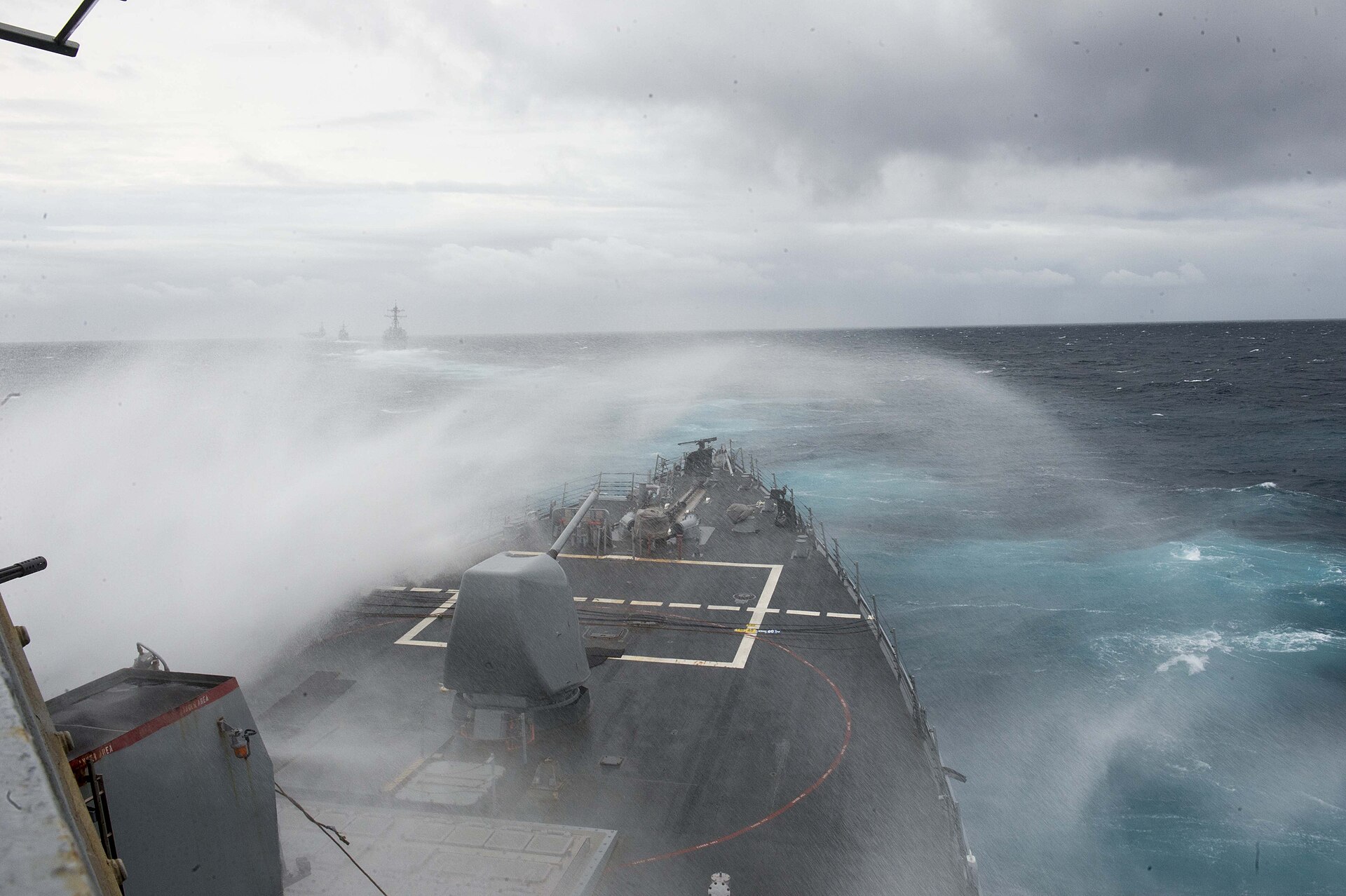
The Pentagon's UAP office released its latest annual report on July 20, 2026, and most of its 14 pages read the way these documents usually read. Case counts. Resolution statistics. Balloons, birds, and satellites. Then, in the section covering the maritime domain, a single paragraph describes something with no easy precedent in the office's public reporting.
"The single maritime domain UAP case AARO received involved a report from U.S. Navy assets operating off the coast of Virginia," the report states. "The report described approximately 100 airborne UAP and two, likely uncrewed, surface systems. AARO is actively investigating this event in coordination with the reporting unit."
That is the entire public account. One hundred airborne objects. Two uncrewed vessels on the water beneath them. An active investigation, no timeline, no sensor data described, no date given for when the event occurred. The All-domain Anomaly Resolution Office received 319 UAP reports during the period the document covers, and this is the one its analysts chose to flag as still open in coordination with the unit that filed it.
The case deserves careful reading, both for what it documents and for what it does not. The documented record is thinner than the headlines suggest. The mundane explanations are stronger than enthusiasts want them to be. And the genuinely open questions are more specific than either camp tends to acknowledge.
What the Report Actually Says
The Fiscal Year 2025 Consolidated Annual Report on Unidentified Anomalous Phenomena covers incidents reported to AARO between June 2, 2024 and May 30, 2025. It arrived late. Congress structured annual UAP reporting under 50 U.S.C. § 3373, and prior editions were delivered in the fall; the FY2024 report was published in November 2024. This one did not appear until July 2026, months past the cycle Congress contemplated, a delay the report does not explain.
AARO itself is a young office working an old problem. Congress created it in the Fiscal Year 2022 National Defense Authorization Act and charged it with detecting and resolving unidentified objects across the air, land, sea, and space domains that could threaten national security or endanger military operations. The annual reports are a statutory product, delivered to congressional committees in unclassified form with classified annexes. What the public reads is the unclassified layer, which is worth remembering when a case description runs three sentences long.
The office received 319 new reports during the period: 284 describing events inside the reporting window and 35 describing older events that had never been logged in prior reports. Of the 319, analysts resolved 114. They also closed 256 cases from earlier reporting periods, bringing total resolved investigations for the year to 370. Every resolved case, the office states, traced back to a conventional cause. The full case archive stood at 1,870 reports as of May 30, 2025.
Broken out by domain, 274 of the new reports involved the air, 44 involved space, and exactly one involved the maritime domain. That one is the Virginia case. The resolved cases were attributed to balloons, birds, satellites, aircraft, and small drones, plus a single rocket launch and, in one instance, a manned jet pack.
The Virginia paragraph stands apart from that inventory in three ways. First, scale: roughly 100 objects reported at once, against a caseload where most reports describe one object or a small group. Second, the multi-domain character: airborne objects operating above surface craft, which the report describes as likely uncrewed. Third, status: AARO did not move this case into its holding archive for lack of data, which is what happened to most unresolved reports. It kept the case active and is working it with the reporting unit.
Why the Location Matters
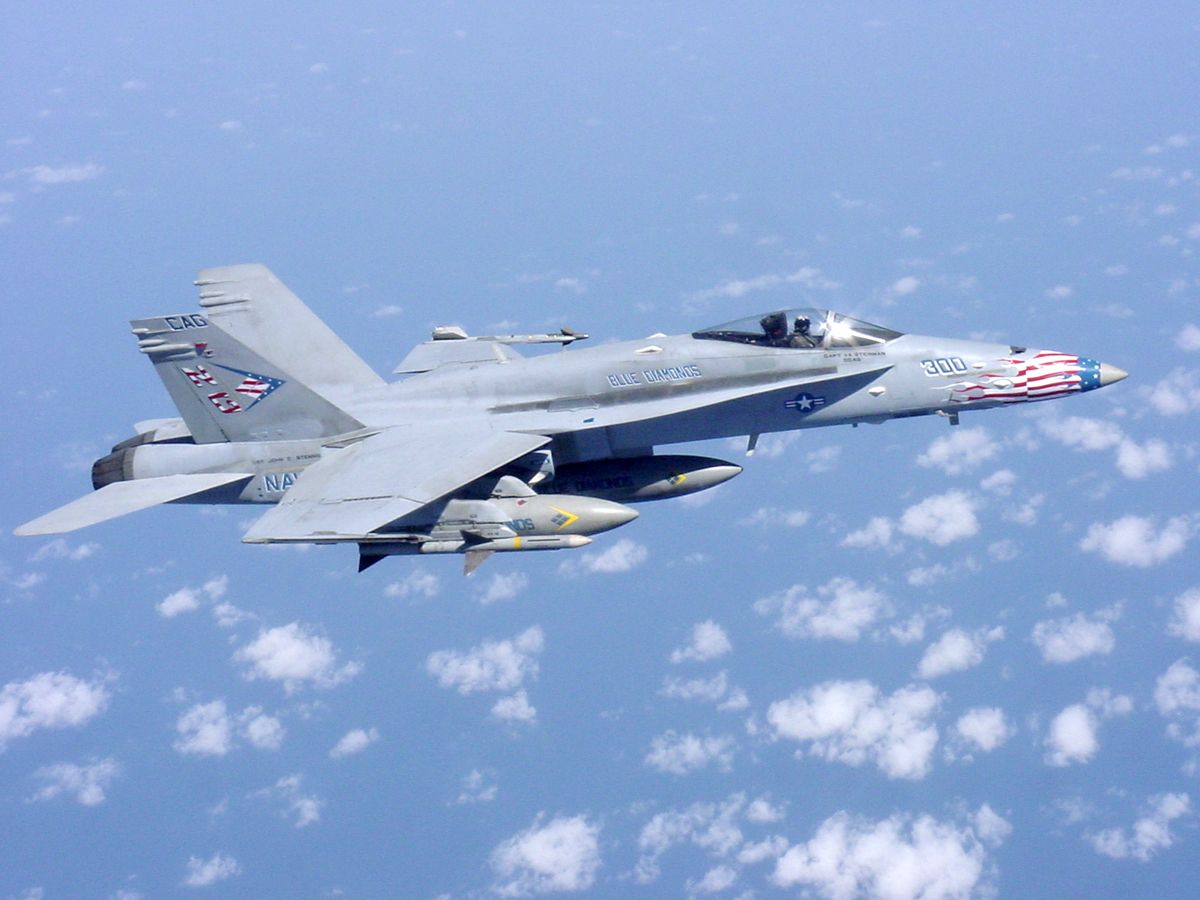
The waters off Virginia are among the most heavily instrumented and heavily trafficked military operating areas on Earth. Naval Station Norfolk, the largest naval base in the world, sits at the mouth of the Chesapeake Bay. The Virginia Capes operating area, directly offshore, hosts carrier workups, destroyer qualification exercises, and live-fire training year round. Oceana Naval Air Station and Langley Air Force Base put constant military air traffic over the same water.
That density cuts both ways. It means a large formation of unidentified objects was operating in airspace where detection assets are thick, which makes the report harder to dismiss as a misperception by an isolated observer. It also means the area is saturated with lawful and unlawful drone activity, coastal shipping, and training exercises, which multiplies the number of ordinary things a hundred distant objects could turn out to be.
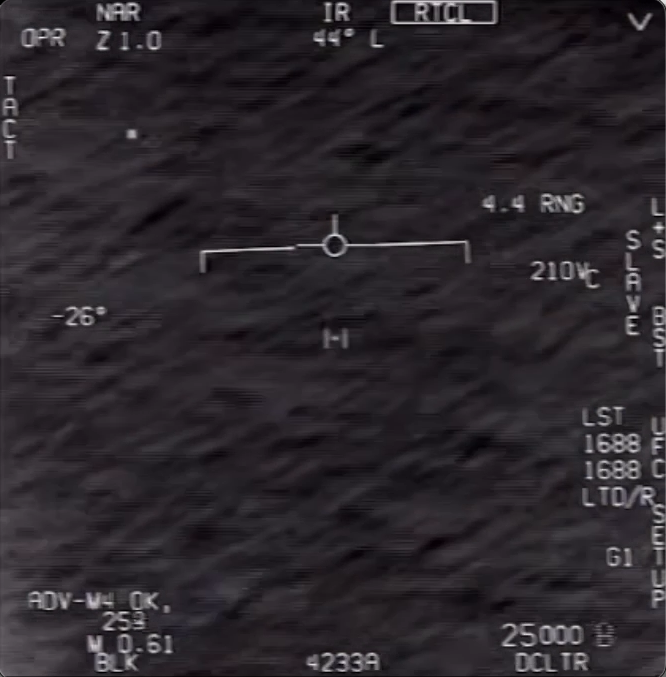
These are also not the first unexplained objects reported in these waters. Between 2014 and 2015, pilots flying from the USS Theodore Roosevelt reported near-daily encounters with unidentified objects in the training ranges off Virginia Beach, events that produced some of the most analyzed military UAP footage on record and that this journal has examined in detail. A decade later, the same stretch of ocean has produced the Pentagon's only active maritime UAP case. That could be coincidence, since this is where the Navy concentrates its Atlantic training. It is still a pattern worth stating plainly.
The report is also silent on when the event happened. The reporting window spans June 2024 through May 2025, a period that included, in its middle months, the most intense wave of drone sighting reports over the eastern United States in recent memory. Whether the Navy event belongs to that wave or predates it is not something the public document answers.
The Skeptic's Reading: Swarms Have Precedent
Anyone assessing this case honestly has to start with the fact that swarms of unidentified objects around Navy ships have appeared before, and the best-documented prior episode resolved in a mundane direction.
In July 2019, multiple destroyers operating off Southern California logged repeated nighttime encounters with groups of unidentified aircraft. Deck logs obtained by journalists under the Freedom of Information Act recorded the ships tracking the objects, launching snoopie teams, and coordinating with other vessels over several nights. The episode circulated for two years as a leading modern UAP case. Then Navy officials told Congress in 2022 that investigators had resolved several of those events as drones, and reporting at the time examined commercial vessels operating in the area as a possible launch platform. The full picture was never made public, but the trajectory of the case moved steadily from anomaly toward unmanned aircraft.
The pattern since then points the same direction. Drone incursions over Langley Air Force Base in December 2023 went on for weeks and remain formally unattributed, but nobody involved suggested the vehicles were anything other than drones. The New Jersey sighting wave of late 2024 generated thousands of reports that federal agencies ultimately attributed overwhelmingly to lawful aircraft, hobbyist drones, and misidentified stars. And AARO's own FY2025 report notes, in a separate section, that the government logged 50 notifications of unmanned aerial systems near U.S. nuclear infrastructure, weapons, and launch sites during the period, up from 18 the year before. None of those 50 were classified as UAP. Small drones near sensitive sites are no longer an anomaly. They are a documented, growing category of security incident.
Read against that backdrop, the two "likely uncrewed, surface systems" in the Virginia report look less like an exotic detail and more like a clue. Coordinated air vehicles operating with uncrewed surface craft is a recognizable profile: it describes a drone swarm operating with support vessels, a capability that navies, research programs, and sophisticated private actors have all demonstrated. If the event resolves the way the 2019 California events trended, the finding will be human technology, and the interesting question will become whose.
Trained Observation Is the Bottleneck
AARO's central complaint is data quality: untrained observation produces unresolvable reports. Structured perception protocols exist for exactly this problem. The CRV methodology developed under Project STARGATE trains disciplined observation and reporting, and you can train it today.
Start Training →What Genuinely Remains Open
The mundane reading is strong, but it is not a resolution, and the report itself is candid about why. "A lack of timely and actionable sensor data continues to constrain AARO's ability to resolve cases," the office writes. Close to 200 of the year's reports went unresolved for exactly that reason, moved into what the office calls its active archive pending better data. The Virginia case was not archived. It is one of the events AARO is still working, and the office identified nine reports across its caseload that warrant continued analysis by intelligence and scientific partners.
Two other passages in the document keep the open questions honest. The office acknowledges receiving reports near national security sites and critical infrastructure in which "some narrative reports were suggestive of phenomena whose performance characteristics exceed the known state-of-the-art within a given domain." It immediately adds the caveat that matters: "No technical data accompanied these reports." Eyewitness narrative without sensor corroboration is precisely the kind of evidence that has kept this subject unresolved for eighty years. The report also notes two cases during the period in which crews described electronic or avionic interference in proximity to a reported UAP. AARO has not determined whether the interference was actually attributable to the objects.
So the honest state of the Virginia case is this. A Navy unit reported an event large and coherent enough that the Pentagon's anomaly office singled it out, kept it active, and disclosed it to Congress. The profile of the event is consistent with a coordinated unmanned systems operation. No public evidence establishes that, and no public evidence rules out something stranger. The report that disclosed the case also documents, repeatedly, that the government's sensing and reporting pipeline is not yet good enough to close cases like it.
The Rest of the Report, Briefly
The Virginia case is the document's most striking disclosure, but the surrounding report rewards a careful read, because it shows an office getting materially better at the unglamorous work of explaining things.
The clearest example is in the space domain. All 44 space-domain reports came from observers on the ground or in aircraft, 42 of them from civilian pilots reporting through the FAA. None came from space-based sensors. Using a new three-dimensional modeling capability, AARO concluded the observations were consistent with sunlight reflecting off satellites, an effect that has become dramatically more common as satellite constellations grow. That single analytic tool did more to clear the caseload than any other development in the report.
The overall volume also dropped sharply. The FY2024 edition documented 757 reports, a figure inflated by a large backlog of historical civil aviation submissions. The FY2025 count of 319 likely reflects that backlog clearing rather than a change in how often crews see things they cannot identify. The proportion that resolves, and the reason the rest do not, has stayed remarkably stable across every edition: the data was not good enough.
The report also addresses the claims that have dominated congressional interest since 2023. AARO states again that it has found no evidence the resolved cases involved advanced foreign adversarial capabilities or breakthrough technology, and no evidence that the government possesses recovered UAP material. At the same time, it discloses that the office is developing formal handling procedures for such material "should such materials ever come into the possession of the USG," which is the kind of sentence that both camps will quote for opposite reasons. Its secure reporting channel for current and former officials received 262 submissions from people claiming firsthand knowledge of government UAP programs. The office assessed 255 of them as out of scope. Seven people were selected for follow-up interviews.
Whatever one makes of any individual number, the report describes a pipeline problem more than a mystery problem: hundreds of reports arrive, most carry too little data to analyze, and the cases that resolve are the ones where instruments happened to be pointing the right way.
What to Track From Here
The Virginia investigation has a defined owner, a cooperating reporting unit, and a disclosure trail that started in a congressionally mandated report. That makes it trackable. If AARO resolves the case, the resolution should surface in next year's annual report, in the office's published case resolutions, or in congressional testimony. A finding of adversary unmanned systems operating off the largest naval base in the country would be a significant national security story in its own right. A finding that the data was insufficient to resolve anything would be a quieter but equally telling outcome. A finding of something else would be the story of the decade. The disciplined position is to wait for the data while noting which outcome the precedent favors.
For readers of this journal, the deeper thread is the one AARO keeps writing in every report: the limiting factor in anomaly research is the quality of human observation and reporting. That was also the founding problem of Project STARGATE, which spent two decades trying to turn unstructured human perception into a disciplined, reviewable data format. The government's UAP office and the government's old anomalous cognition program are, in that sense, working the same problem from different ends: what a human observer reports is only as useful as the structure wrapped around the reporting. One hundred objects off Virginia will resolve, or fail to resolve, on exactly that question.
Share this analysis

The protocols exist. They are trainable.
The government's anomaly programs keep reaching the same conclusion: untrained observation produces unusable data. The CRV protocol developed under Project STARGATE was built to discipline human perception, and Psionic Training runs it as structured, AI-scored sessions.
Begin Training →UAP Report Alerts
Get notified when new government UAP reports and PURSUE tranches drop, plus our analysis of each release. No noise.