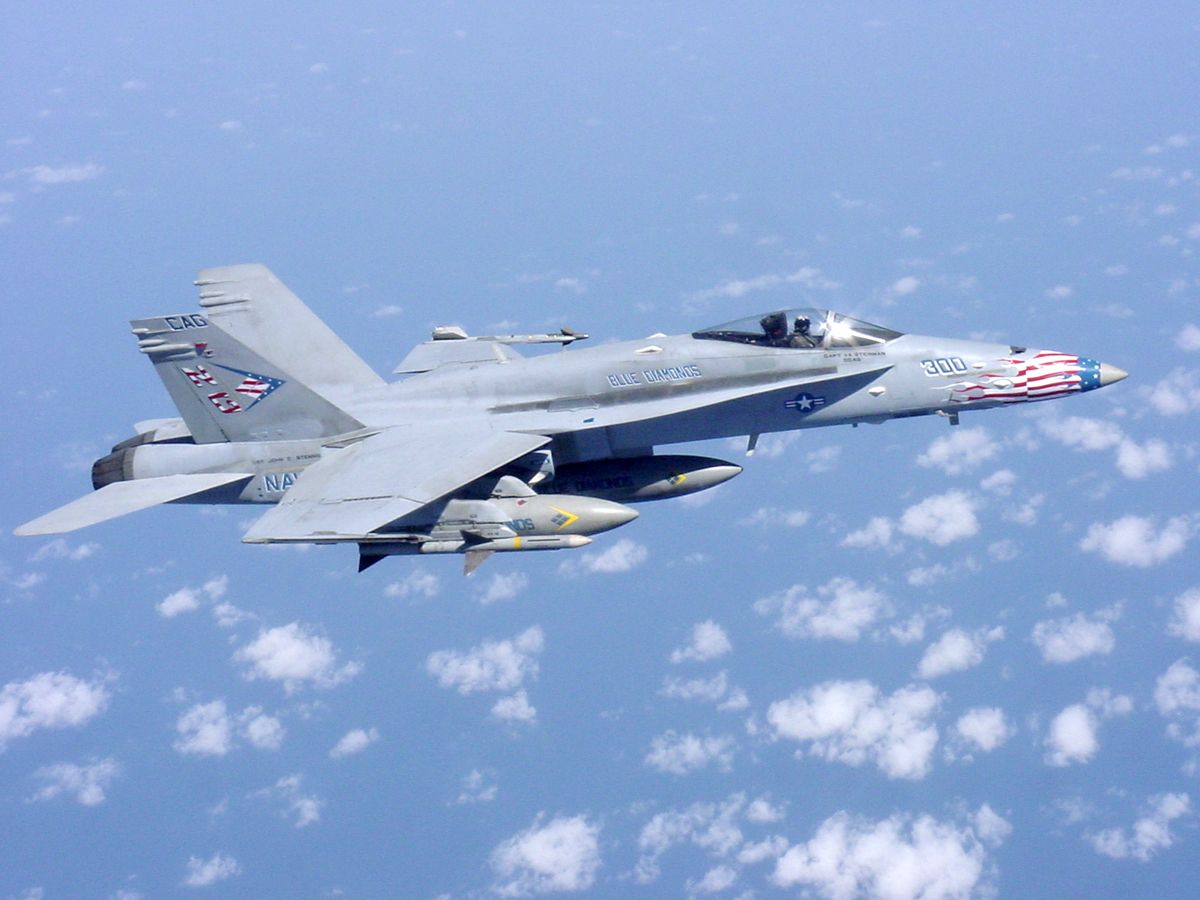
Between 2014 and 2015, aircrew flying off the US East Coast began reporting unidentified objects on their sensors almost every day. The aircraft belonged to squadrons that later deployed aboard the USS Theodore Roosevelt. Two of the three Navy videos that became famous after 2017, the clips known as GIMBAL and GO FAST, came out of those operations. The third, FLIR1, came from the 2004 Nimitz incident off Southern California.
Coverage of these videos has split into two camps that both overstate their case. One treats the footage as visual proof of non-human craft. The other waves it away as obvious sensor artifacts that only the credulous take seriously. The actual record sits between those positions, and it is more useful than either.
What follows is the documented version: what the aircrew reported, what the two videos show, the strongest ordinary explanations on the table, and what is left when those explanations are taken seriously. The objects in these clips are officially unidentified. That is a precise status, and it is not the same as proven.
The record at a glance
- When: 2014 to 2015, off the US East Coast
- Who: F/A-18F aircrew, including former Navy pilot Ryan Graves
- Sensors: upgraded radar, infrared targeting pods, and visual sightings
- The footage: GIMBAL and GO FAST, released by the Pentagon on April 27, 2020
- Official status: authentic, and unidentified, which is not the same as explained
What the Aircrew Reported
The clearest first-hand account comes from Ryan Graves, a former F/A-18F Super Hornet pilot with strike fighter squadron VFA-11, the Red Rippers. Graves has described, in interviews and later in sworn testimony to Congress in July 2023, a period in 2014 and 2015 when his squadron detected unidentified objects in restricted training airspace off Virginia Beach on a near-daily basis.
The detections followed a sensor upgrade. After the squadron's radars were updated to a newer active electronically scanned array system, the objects appeared consistently on radar. They were also picked up on the infrared targeting pods carried by the aircraft, and in some cases reported visually by aircrew. Graves has emphasized that the objects were a flight safety concern before they were anything else. Aircrew reported near misses. One account describes an object passing between two jets. Pilots filed safety reports.
The objects, as described, did not show obvious wings, exhaust plumes, or other conventional signatures, and some were reported to remain aloft for extended periods in conditions where a conventional aircraft would have needed to refuel or land. Those descriptions are striking, and they are also exactly the kind of observation that demands independent confirmation rather than acceptance at face value. A pilot is a trained observer, not an infallible one. What raises this case above an anecdote is that the radar, the targeting pods, and the human observers were reporting the same airspace at the same time.
Three Videos, Two Incidents
It helps to separate the three famous clips, because they are routinely discussed as a set when they come from two different events.
FLIR1 was recorded in November 2004 during the USS Nimitz carrier strike group operations off Southern California. That is the incident associated with David Fravor and the object often described as a Tic Tac. We cover it separately in our analysis of the Nimitz 2004 encounter. GIMBAL and GO FAST were both recorded in January 2015 during the East Coast operations described above. All three were leaked to the public in 2017, most prominently through reporting in The New York Times in December of that year. The Navy and the Department of Defense formally acknowledged and released the three videos on April 27, 2020, confirming they were authentic and that the objects in them remained unidentified.
The 2020 release is the key procedural fact. It established that the footage is real, that it was captured by Navy systems, and that the Navy had not resolved what the objects were. It did not establish anything about their origin. The official word was unidentified, and the Navy was explicit that releasing the videos did not amount to a claim about what the objects were.
GIMBAL
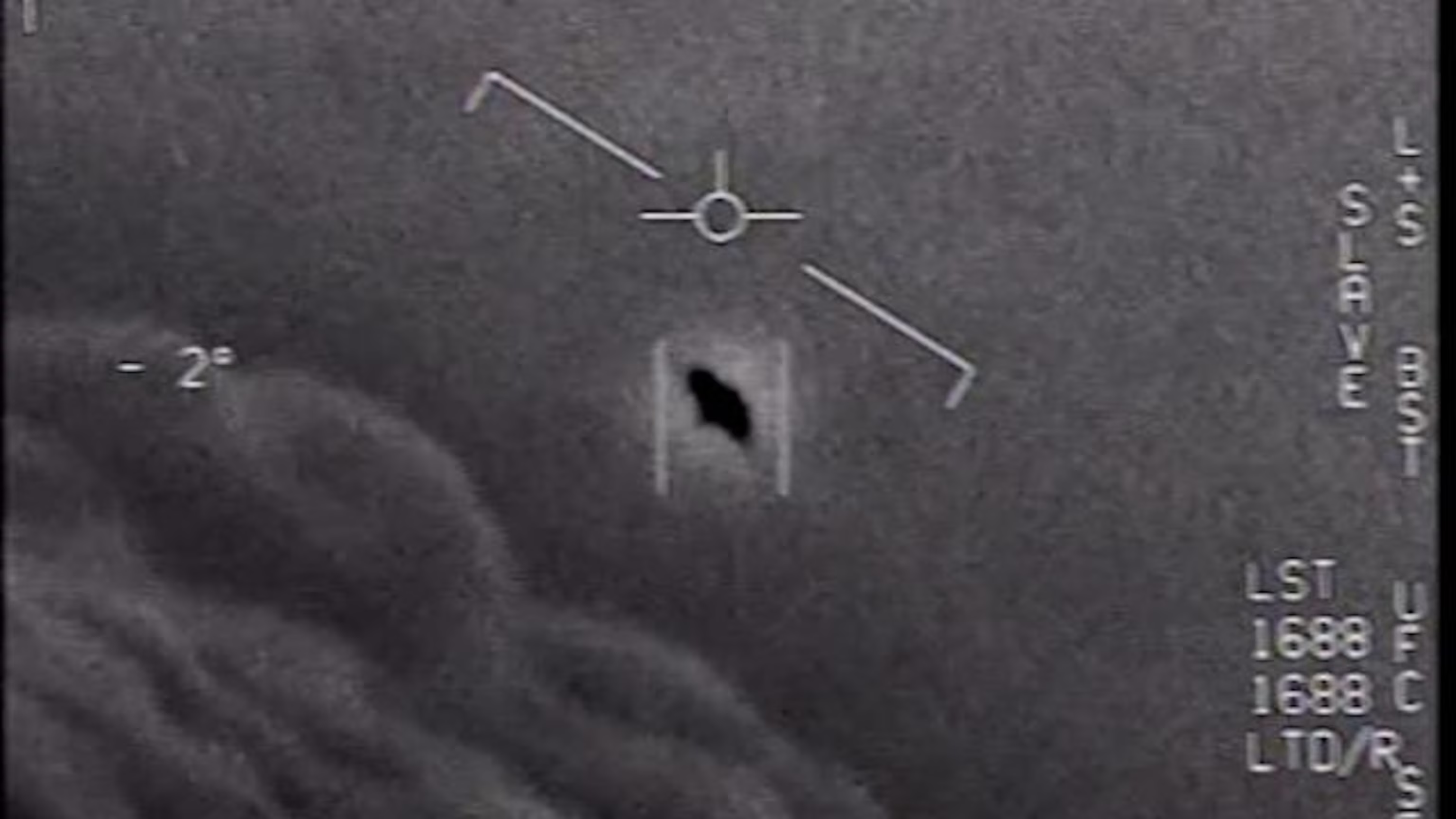
GIMBAL is the shorter of the two East Coast clips. It shows a dark, rounded shape against a cloud background, tracked by the infrared pod. Near the end of the recording, the object appears to rotate. The aircrew audio captures genuine surprise, and one voice can be heard describing a formation of objects, a fleet, behind the one on screen.
The strongest skeptical analysis of GIMBAL comes from Mick West, a writer who specializes in working through the optics and geometry of these clips. West argues that the apparent rotation is an artifact of the targeting pod itself. The pod sits on a gimbal mount, and as it tracks an object across a wide angle, the mechanism rotates to keep the target in frame. That rotation can be transferred to the glare signature of a hot object, making the blob on screen appear to roll. In West's reading, the object is most plausibly the infrared glare of a distant conventional jet, and the dramatic rotation is the camera system, not the object.
This explanation is taken seriously by analysts on both sides, and it has not been definitively proven or disproven. It accounts for the rotation cleanly. What it accounts for less cleanly is the aircrew testimony of multiple objects holding station in the same airspace day after day, and the radar tracks that accompanied the visual detections. The glare hypothesis explains the video. It does not by itself explain the larger pattern the aircrew described. Both things can be true at once: the clip may show a glare artifact, and the squadron may still have been seeing something real and unexplained on other sensors.
Reading Sensor Data Is a Skill
Separating signal from artifact is the same discipline the government's remote viewing program tried to formalize at SRI and Fort Meade: observe carefully, describe before you interpret, and hold your conclusion until the data earns it. Psionic Training is built on that protocol.
Start Training →GO FAST
GO FAST is the clip that looks the most dramatic and holds up the least well under analysis. It shows an object that appears to race low over the ocean surface at high speed while the aircrew react with excitement. The visual impression is of something skimming the water faster than any conventional aircraft should.
The targeting pod, however, displays its own range and angle data on screen, and those numbers tell a different story. When analysts including Mick West ran the geometry using the pod's own readouts, the result indicated an object at roughly 13,000 feet of altitude, not near the surface, moving at a speed that is unremarkable for wind-borne or slow-moving objects. The apparent velocity is a parallax effect. The pod is mounted on a fast-moving jet, and a relatively slow object viewed against the distant ocean appears to streak because the observing platform is the thing that is actually moving quickly. The Pentagon's own assessment has leaned in this direction, treating GO FAST as likely prosaic rather than anomalous.
This matters for how the case is presented honestly. GO FAST is frequently shown as the most impressive of the three videos, and it is arguably the weakest. A site that wants to be trusted has to say that plainly. The credibility of the broader Roosevelt account does not depend on GO FAST, and leaning on the most easily explained clip undercuts the parts of the record that are harder to dismiss.
The footage is real. The objects are officially unidentified. Unidentified is not the same as proven.
What "Unidentified" Actually Means
The single most misused word in this whole subject is unidentified. When the Navy says an object is unidentified, it means the service has not determined what it was. It does not mean the object defies physics, and it does not mean it is extraterrestrial. Unidentified is an honest admission of a gap in analysis, not a claim about origin.
Some unidentified objects are later identified. Many of the cases reviewed by the Pentagon's All-domain Anomaly Resolution Office have resolved to balloons, drones, birds, and sensor effects once enough data was gathered. A smaller number remain open because the data was never good enough to settle them. The Roosevelt objects sit in a genuinely unresolved category for the radar and visual reports, while GO FAST in particular has a strong prosaic candidate and GIMBAL has a plausible one.
Holding those distinctions at once is the entire skill. It is possible to accept that GO FAST is probably mundane, that GIMBAL may be a glare artifact, and that the squadron still encountered something on radar and in the air that has not been explained. None of those positions requires belief in non-human craft, and none of them requires dismissing trained aircrew who filed flight safety reports about near collisions.
Why the Case Still Matters
The Roosevelt encounters are valuable precisely because they are not a single grainy photograph. They combine upgraded radar, infrared targeting pods, multiple aircrew across multiple flights, contemporaneous safety reporting, and an eventual official release that confirmed the footage was real. That is a richer evidence base than almost any historical UAP case, and it is the kind of multi-sensor record that future investigation can actually work with.
It also produced something rare: a former Navy pilot willing to testify under oath. Ryan Graves told a congressional subcommittee in July 2023 that the objects were real, persistent, and a flight safety issue, and he framed the problem in operational rather than sensational terms. Testimony is not proof of what the objects were. It is strong evidence that experienced personnel believed they were seeing something they could not explain, and that the chain of command treated the reports seriously enough to log them.
For readers who work in remote viewing and anomalous cognition research, the lesson of the Roosevelt case is methodological rather than sensational. The same trap appears in both fields. A striking observation invites a fast conclusion, and the fast conclusion is usually wrong in one direction or the other. The disciplined move is to describe what the instruments and the observers actually recorded, test the ordinary explanations first, and report what survives. That is the protocol the government tried to formalize when it studied Project STARGATE, and it is the same protocol that separates credible anomaly research from wishful thinking. The Roosevelt videos do not prove the existence of anything. They document a real, multi-sensor, partially unexplained event, and they reward careful reading far more than they reward certainty.
Share this analysis

The protocols exist. They are trainable.
The discipline that separates a real signal from a sensor artifact is the same one military remote viewers trained at SRI and Fort Meade. Those protocols are documented and available. Psionic Training is built on them.
Begin Training →UAP Case Analysis
Get our credibility-first breakdowns of declassified UAP cases and the disclosure record, straight to your inbox. No hype.