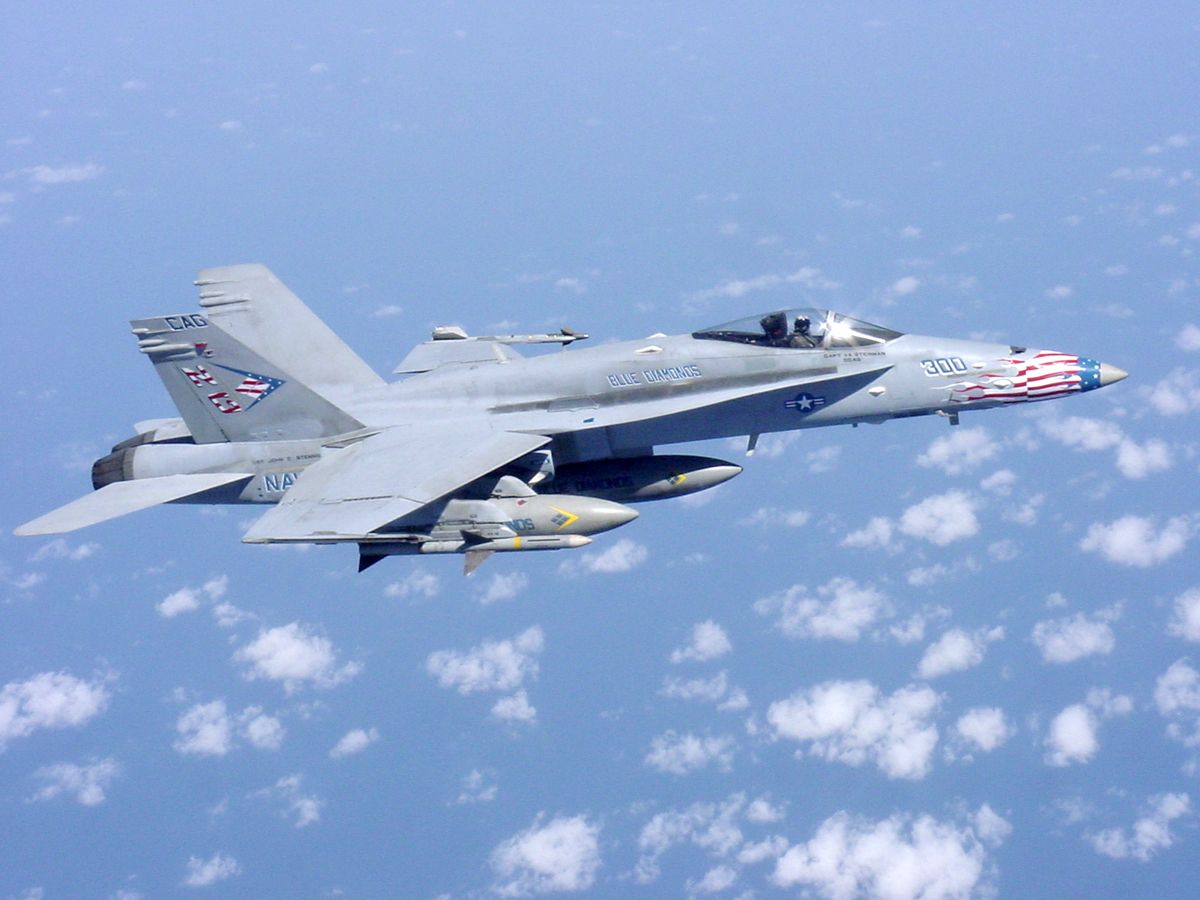
On November 14, 2004, in the Pacific Ocean approximately 100 miles southwest of San Diego, United States Navy Commander David Fravor and his wingman encountered something that neither the U.S. military nor any civilian analyst has since been able to explain. What they saw — and what the USS Princeton's advanced radar system tracked over two weeks of continuous contact — became the most rigorously documented unidentified aerial phenomenon case in American military history.
For thirteen years, the incident remained classified or quietly suppressed. Then, in December 2017, a front-page story in the New York Times changed everything.
The USS Princeton's Two-Week Radar Track
The encounter did not begin on November 14. It began approximately two weeks earlier, when the USS Princeton — the Nimitz carrier strike group's Aegis guided-missile cruiser — began detecting anomalous contacts on its AN/SPY-1B radar system. The contacts were appearing at altitudes above 80,000 feet and descending rapidly to hover at approximately 20,000 feet, then accelerating back upward or disappearing from radar entirely.
Senior Chief Operations Specialist Kevin Day, responsible for the Princeton's radar data that day, later described the objects as appearing in groups of five to ten, moving in a manner inconsistent with any known aircraft — no propulsion signature, no flight path consistent with aerodynamic principles, no transponder signal. The contacts were being tracked on the most advanced radar system in the U.S. Navy fleet. Day believed them to be real physical objects.
On November 14, Commander Fravor and Lieutenant Commander Jim Slaight were launched in F/A-18F Super Hornets to visually investigate an anomalous contact the Princeton had been tracking. They were given coordinates and told no weapons were aboard the target — the standard communication when an operator suspects the contact might be an experimental U.S. aircraft.
Fravor's Visual Encounter: The Tic Tac
Fravor and Slaight descended to 20,000 feet over a patch of disturbed white water approximately 50 feet in diameter — churning as if something large was just below the surface or had recently been. Above the disturbance, hovering and moving erratically, was a white, oblong craft with no wings, no tail, no visible propulsion system, and no exhaust. Fravor later described it as roughly the size and shape of a Tic Tac breath mint — approximately 40 feet long, perfectly white.
The object was mirroring the ocean chop below it, moving laterally left and right in a manner that Fravor said reminded him of a ping-pong ball. When Fravor began a slow spiral descent to approach it, the object accelerated directly toward him, then instantaneously — with no discernible acceleration curve — repositioned itself below him at a different altitude. When Fravor turned toward it again, the object accelerated away at a speed he described as far beyond anything in the U.S. military inventory, disappearing from visual range within approximately two seconds.
When Fravor and Slaight returned to the Princeton and reported what they had seen, they were told the object had already repositioned itself — at their combat air patrol point, approximately 60 miles away — in the time it took them to fly back to the ship. It was as if the object had known where they were going.
Train the Protocol
The intersection of UAP evidence and consciousness research is the frontier Psionic Research covers. If you want to train the protocols that government programs used to investigate these phenomena, Psionic Training is where to start.
Start Training →The FLIR1 Video
Shortly after Fravor's encounter, a second pair of F/A-18s was launched with a FLIR (Forward Looking Infrared) targeting pod. The pilots captured approximately one minute and seventeen seconds of infrared footage of an object that matched Fravor's description — white, oblong, without visible propulsion, moving in ways inconsistent with aerodynamic flight. This footage became known as the FLIR1 video.
The FLIR1 video shows the object accelerating out of frame, with the targeting system briefly losing lock. The pilots can be heard expressing surprise and confusion on the audio track. The object's thermal signature — or absence thereof — was notable: FLIR systems detect heat, and objects with conventional propulsion leave distinct thermal signatures. The Tic Tac showed none.
The video was classified following the encounter. Copies reportedly circulated informally among naval aviation personnel for years before being leaked.
The 2017 New York Times Revelation
On December 16, 2017, the New York Times published an investigation by reporters Helene Cooper, Ralph Blumenthal, and Leslie Kean revealing that the U.S. Department of Defense had been operating a secret program called the Advanced Aerospace Threat Identification Program (AATIP), funded at $22 million and tasked specifically with investigating UAP incidents including the Nimitz encounter. The article included the FLIR1 video and a video from a 2015 encounter off the East Coast.
The Times story prompted the Pentagon to confirm that AATIP had existed — though officials disputed its scope and mission — and provided the first official acknowledgment that military personnel had encountered aerial phenomena they could not explain using known technology.
The Pentagon's 2020 Official Release
On April 27, 2020, the U.S. Department of Defense took an unprecedented step: it officially released three declassified videos of unidentified aerial phenomena captured by Navy pilots, including the FLIR1 video from the 2004 Nimitz encounter. The official statement confirmed that the videos had been cleared for release "in order to clear up any misconceptions by the public on whether or not the footage that has been circulating was real, or whether or not there is more to the videos."
The Pentagon's release was significant not for what it claimed about the nature of the objects — officials were careful to say only that the objects remained "unidentified" — but for what it conceded: that these encounters had occurred, that the footage was authentic, and that the U.S. military had no conventional explanation for what its own pilots had seen and recorded.
Commander Fravor, who retired from the Navy in 2006, has given extensive on-record testimony in the years since the story broke — to Congress, to journalists, and on multiple public platforms. His account has never changed in any material detail. He is unambiguous about what he believes he encountered: "I can tell you, I think it was not from this world. I'm not crazy, haven't been drinking. It was — what I saw, with four sets of eyes — it was real."
What the Nimitz Case Changed
The USS Nimitz encounter, and the Pentagon's eventual acknowledgment of it, effectively ended the era in which the U.S. government's official position was that UAP were not a serious subject. Congress subsequently established the Unidentified Aerial Phenomena Task Force (2020) and the All-domain Anomaly Resolution Office (AARO) (2022), both tasked with investigating UAP incidents on an ongoing basis. The most recent product of this institutional shift is the PURSUE disclosure program, which began releasing declassified UAP files in May 2026.
For those who had followed the subject for decades — including former Project STARGATE researchers who had argued since the 1990s that the government's interest in anomalous phenomena extended well beyond remote viewing — the Nimitz revelations felt less like a surprise than a confirmation of what the declassified record had always suggested: that the United States government knew more than it was saying, and that the anomalous was real. For a deeper look at the intersection of consciousness research and UAP, see our analysis of UAP contact protocols.

The Anomalous Is Real. Train the Protocol.
The same researchers who studied UAP for the government developed Controlled Remote Viewing — a structured methodology for anomalous cognition. Psionic Training is built on that framework.
Begin Training →Further Reading
- Cooper, H., Blumenthal, R., & Kean, L. (2017). "Glowing Auras and 'Black Money': The Pentagon's Mysterious U.F.O. Program." New York Times, December 16, 2017.
- U.S. Department of Defense (2020). Statement on UAP video releases, April 27, 2020.
- Fravor, D. (2019). Testimony to U.S. Senate Armed Services Committee, Subcommittee on Emerging Threats and Capabilities.
- Kean, L. (2010). UFOs: Generals, Pilots and Government Officials Go on the Record. Harmony Books.
- All-domain Anomaly Resolution Office (AARO). UAP Reports, U.S. Department of Defense, 2022–present.
Intel Briefings
Stay in the signal: analysis of declassified research, remote viewing science, and new findings. No noise.