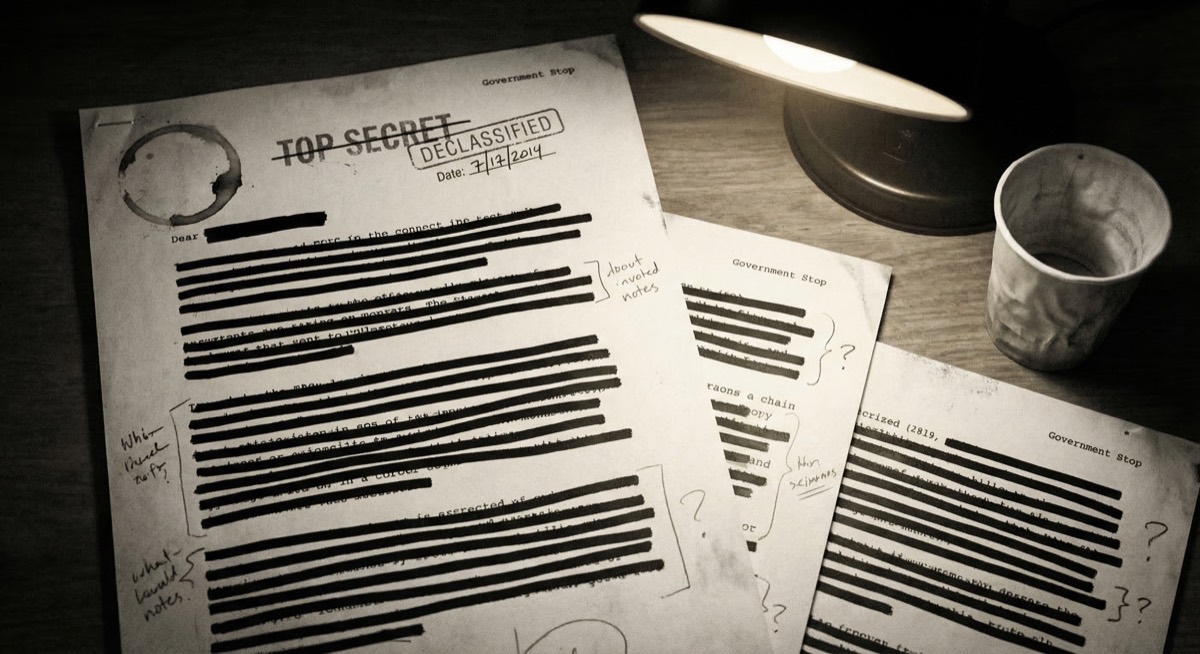
On May 8, 2026, the Pentagon published 162 declassified records through a new website called PURSUE, short for the Presidential Unsealing and Reporting System for UAP Encounters. The site went live at war.gov/ufo. Within hours, every major outlet ran a version of the same story. Most of the coverage fell into familiar grooves: either breathless excitement about aliens, or dismissive framing about fuzzy blobs and budget waste.
Neither framing is very useful if you actually want to understand what was released and what it means. The 162 records are not a single revelation. They are a collection of materials from four different federal agencies, spanning nearly eight decades of incidents that the government investigated and could not resolve. That last part is the detail most coverage skips: every file in this release carries the official status of "unresolved." The government looked at these cases and could not explain what was observed.
What's Actually in the Release
The first tranche contains 120 PDF documents, 28 videos, and 14 image files. They come from the Department of War (82 records), the FBI (56 records), NASA (12 records), and the State Department (8 records). Four additional records have no agency attribution listed.
The materials include incident reports, photographs, video footage, witness accounts, military flight records, astronaut mission transcripts, and internal correspondence. They cover a time period from 1947 to roughly 2024. Some are newly declassified. Others were technically available in scattered archives but had never been collected and presented together in this way.
The format varies considerably. Some Pentagon records are detailed incident reports with radar data and pilot testimony. Some FBI files are brief investigative notes. The NASA materials include mission photography and crew communications. There is no single narrative thread connecting all 162 records. They are unified only by the fact that each documents something the investigating agency could not identify.
The Military Footage
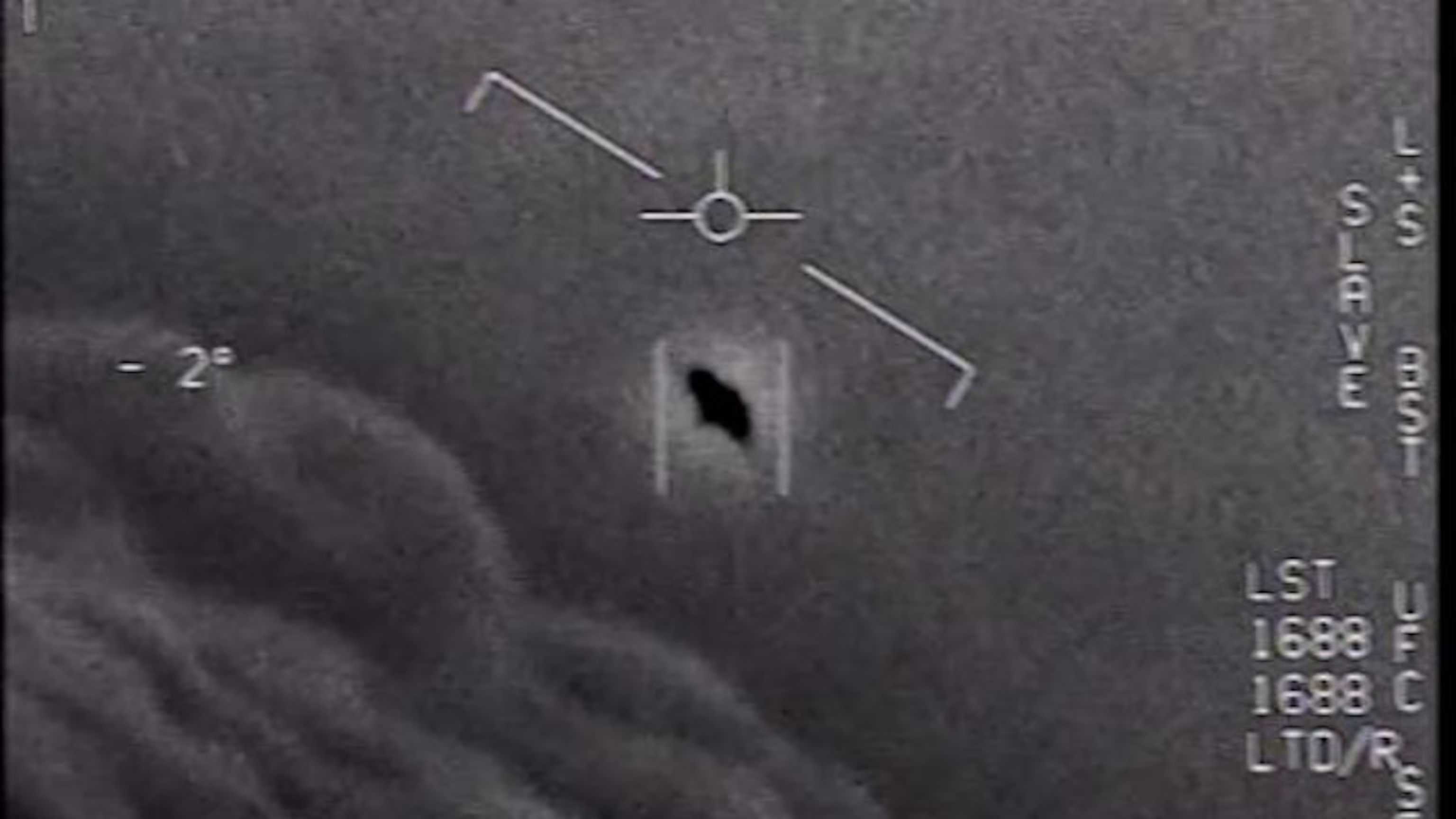
Several of the video files are worth close attention. A Central Command recording runs two minutes and 57 seconds of infrared footage from 2023, captured near Greece. It shows an object flying near the ocean surface executing multiple 90-degree turns at approximately 80 miles per hour. Conventional aircraft do not make instantaneous right-angle course changes at speed. The footage does not prove anything about the object's origin, but it does create a clear engineering problem: something is moving in a way that known propulsion systems do not account for.
A second notable clip from U.S. Indo-Pacific Command runs only nine seconds. It shows infrared footage of an object near Japan that the Pentagon describes as football-shaped. Nine seconds is not much data, but the record includes the military's own assessment that the object remains unidentified after analysis.
There is also a triangular metallic object reported by a U.S. military pilot at 25,000 feet over the Mediterranean. The file includes the pilot's account and the command's evaluation. The geometric consistency of the description is notable. Triangular craft appear repeatedly across UAP literature from multiple countries and decades — from the McMinnville photographs of 1950 to modern military encounters. Whether that represents a real pattern or a perceptual bias in witnesses is an open question, but the PURSUE release adds another data point from a trained military observer.
The NASA Files
Twelve records come from NASA, and they include material from Apollo 12, Apollo 17, and the Gemini 7 mission. The Apollo 17 photograph, taken in December 1972 during the last crewed lunar mission, has drawn particular attention. Upon magnification, the image shows three dots in a triangular formation in the lower-right quadrant of the lunar sky. The Department of War has opened a formal investigation into this photograph as part of the PURSUE review process.
The significance of the NASA files is less about any single image and more about what their inclusion signals. NASA has historically been reluctant to engage with UAP questions publicly. Including their materials in the first PURSUE tranche is a deliberate choice. The message is clear: this is not just a military issue, and the government is treating historical space mission anomalies with the same investigative posture as contemporary airspace incidents.
The FBI Contribution
The FBI's 56 records are the second-largest agency contribution. This is significant because the FBI's role in UAP investigation is less well known than the Pentagon's. The Bureau has historically tracked UAP incidents that involved potential national security implications on domestic soil, including incidents near nuclear facilities, military installations, and critical infrastructure.
The specific content of the FBI files ranges from brief investigative memos to more detailed case assessments. What they demonstrate collectively is that the FBI maintained a sustained interest in UAP incidents over multiple decades. This was not a fringe activity within the Bureau. It was documented, filed, and retained as part of the normal investigative record.
Train the Protocol
The PURSUE files confirm what decades of STARGATE research suggested — these phenomena warrant serious investigation. Train the same protocols the government used with Psionic Training.
Start Training →What the Skeptics Are Saying
Not everyone is impressed. David Whitehouse, an astrophysicist and former BBC science journalist, reviewed the materials and concluded that some appear to be optical artifacts, some are indistinct imagery, and some are likely conventional objects like balloons. He found no evidence of anything he would characterize as artificial or alien. The War Zone, a defense-focused publication, published a similarly measured assessment noting that many of the records are underwhelming on their own.
These reactions are worth taking seriously. Individual files in isolation often are ambiguous. A nine-second infrared clip or a grainy lunar photograph does not constitute proof of anything. The skeptical position is valid on a file-by-file basis.
But the skeptical framing also misses what makes PURSUE interesting as a systemic event. The U.S. government collected 162 cases it could not resolve, drew them from four agencies spanning eight decades, and published them on a dedicated website with a commitment to ongoing releases. That institutional behavior tells you something independent of whether any individual file is compelling. Governments do not build sustained disclosure infrastructure for optical artifacts and weather balloons.
What This Means for the Research Community
For researchers in remote viewing and anomalous cognition, the PURSUE release is significant context. The government programs that studied remote viewing at SRI and later at Fort Meade operated in the same institutional environment that was simultaneously investigating UAP — the same environment that eventually confirmed cases like the 2004 USS Nimitz encounter. Project STARGATE and the UAP investigation programs shared personnel, shared classification levels, and in some cases shared the same oversight committees.
That connection is not speculative. It is documented in the declassified STARGATE archive. Remote viewers were tasked with UAP-related targets. The intelligence community treated anomalous cognition and unidentified aerial phenomena as adjacent problems, because in their operational experience, they were.
PURSUE reopens that institutional context. If rolling disclosures continue as promised, we should expect to see materials that touch the edges of the consciousness research programs, even if they are not labeled that way. The 23 years of government psi research did not happen in a vacuum. It happened alongside exactly the kind of cases PURSUE is now publishing.
What Comes Next
Officials have described this as the beginning of a rolling disclosure process. Additional tranches will be posted as materials are reviewed and declassified. The cadence is roughly every few weeks. That pace creates a sustained content cycle that the research community has never had before. For decades, UAP and psi researchers worked with one-off leaks, FOIA requests, and occasional congressional testimony. PURSUE is different because it is a system, not a single event.
We will be analyzing each subsequent release as it lands. The PURSUE files are an ongoing primary source, and primary sources deserve close reading. Not headline scanning. Not Twitter reactions. Actual analysis of what the documents say, what they connect to, and what questions they raise.
That is what Psionic Research is built to do.
Share this analysis

The training protocols are real
The same government that kept these UAP files classified for decades also spent $20 million developing remote viewing protocols. Those protocols are documented, teachable, and available. Psionic Training is built on them.
Begin Training →PURSUE File Alerts
Get notified when new PURSUE tranches drop, plus our analysis of each release. No noise.