If you want to sound less like a believer and more like a scientist about anomalous experience, the fastest way is to stop arguing about the sky and start asking about the observer. That is, roughly, the move Garry Nolan made, and it is why a mainstream Stanford researcher ended up with one of the more provocative datasets in this whole field.
The short version
- Garry Nolan is a serious Stanford scientist, not a fringe figure: pathology professor, prolific inventor, founder of multiple biotech companies.
- Studying people who reported contact with anomalous phenomena, he found unusual density in a deep brain region tied to intuition and pattern recognition.
- He argues these people were born with the difference, rather than acquiring it from the experience.
- It is a real, testable observation and also a small, self-selected one. Correlation is not proof, and the honest read sits in between.
Who Garry Nolan actually is
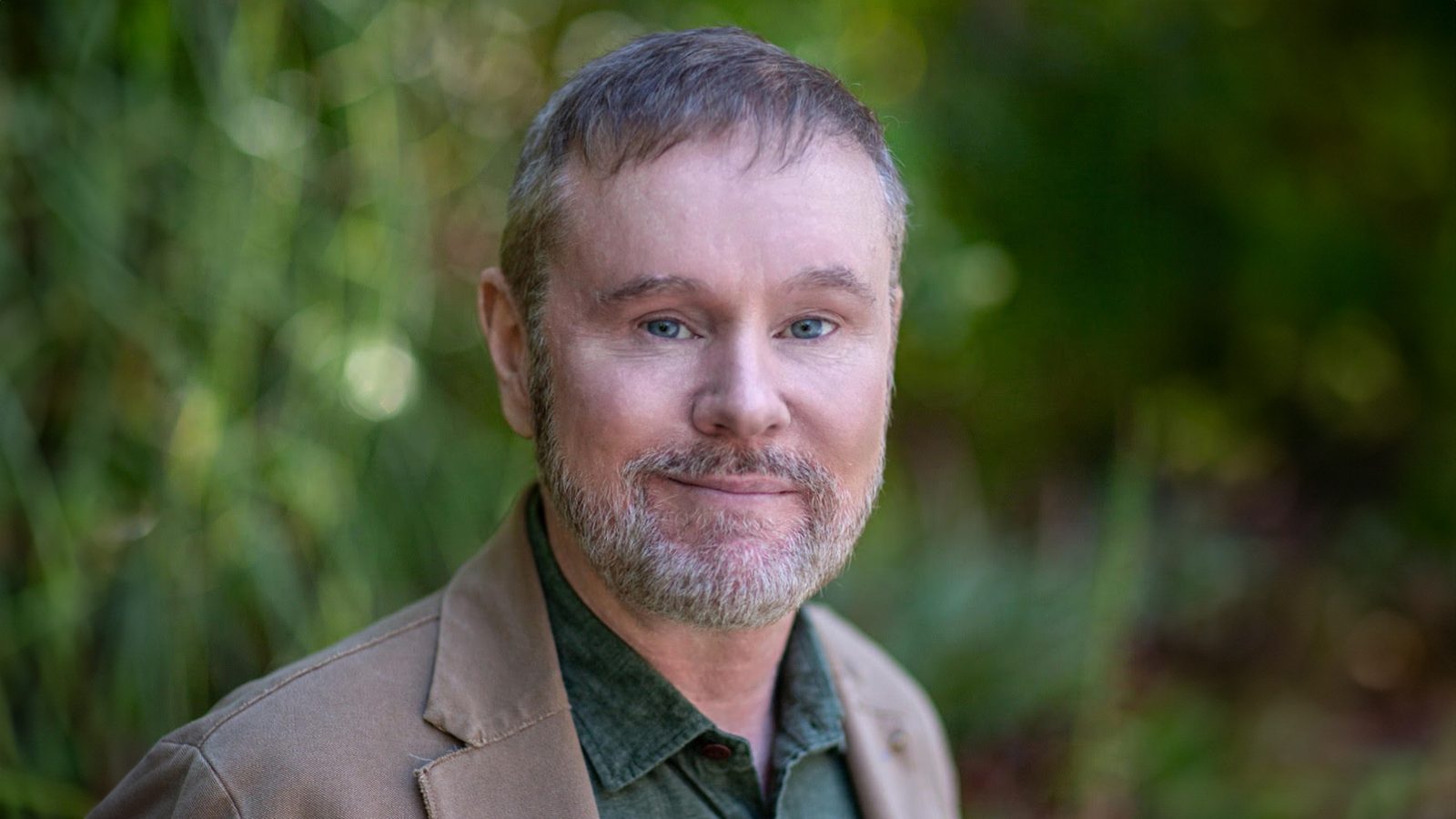
Credibility matters here, because it is the thing most coverage of this topic lacks. Nolan is a professor of pathology at Stanford. He has been named among the university's top inventors, holds dozens of US patents, has authored hundreds of peer-reviewed papers, and has founded a string of biotechnology companies. His day job is advanced single-cell analysis, the kind of instrumentation that maps immune systems and cancers one cell at a time. This is not someone who wandered in from the paranormal circuit. It is someone who brought laboratory discipline to a subject that rarely gets any.
The scans that started it
By Nolan's account, the work began in 2013 when he was approached at Stanford by two visitors, one describing himself as former intelligence, the other an aerospace executive. They brought MRI scans from personnel who had developed health complaints after reported proximity to suspected anomalous craft, a symptom picture that overlaps with what later became widely discussed as Havana Syndrome. The request was to see whether anything in the brains could be characterized.
What Nolan reported noticing was not damage in the way you might expect. In a subset of these individuals, a deep structure of the brain looked unusually developed rather than injured.
The over-connection
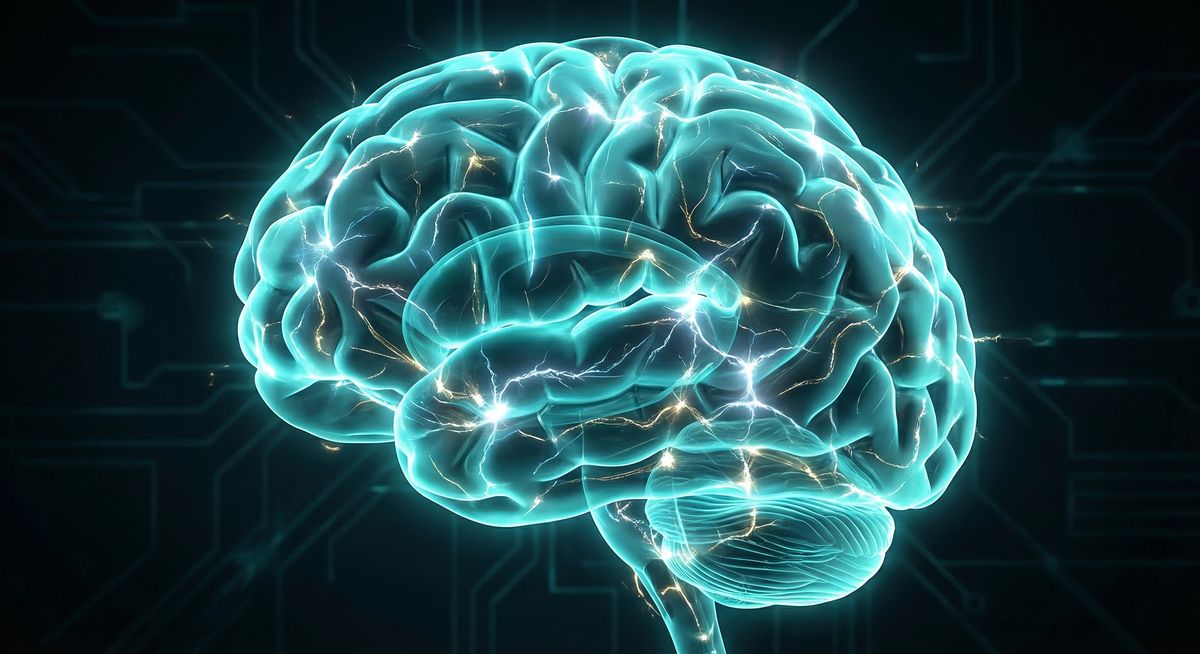
The finding Nolan describes is an unusually high density of neural connections between the head of the caudate nucleus and the putamen, structures in the basal ganglia involved in learning, habit, and rapid pattern recognition. In his words, if you looked at a hundred average people you would not see this kind of density. Just as important, he argues the pattern appears to be congenital, something the individuals were born with, rather than a scar left by whatever they experienced.
If that holds up, the interesting reframe is that the brain region implicated is one tied to intuition, the fast, pre-verbal sense of knowing that precedes conscious reasoning. It suggests that whatever these people report, the substrate involved is a recognition system, not a receiver for something exotic.
The reframe is quietly radical: not a special antenna for the paranormal, but an unusually well-wired system for noticing patterns before the conscious mind catches up.
Where the careful line sits
What makes it credible
A rigorous scientist, standard imaging, a specific and anatomically sensible structure, and a claim framed as testable rather than mystical. It points somewhere concrete: the neuroscience of intuition.
The skeptic's read
The samples are small and self-selected. Imaging findings like these need large, blinded, replicated cohorts before they mean much. Correlation is not causation, and "born with it" is hard to prove from adult scans. It is a lead, not a verdict.
Nolan himself tends to be more measured than the headlines built on top of him. The responsible summary is that a credentialed researcher found a suggestive pattern in a hard-to-study group, published and discussed it openly, and called for more work. That is how a lead is supposed to look before it becomes a result.
The thread back to genetics
This is also where Nolan connects to the other story making the rounds this year. He is a co-author on the pilot study into the genetics of psychic ability, the small exome-sequencing project that flagged differences in non-coding DNA. Read together, the two lines of work sketch a single hypothesis: that the capacity for unusually acute intuition may have both a neural signature and a genetic one. Read carefully, both are still early, both are small, and both are a long way from settled.
Why this matters if you want to train
Suppose Nolan is right and intuition has a physical basis that varies from person to person. The practical question is not whether you were dealt the rare wiring. It is whether the underlying skill, distinguishing a real signal from your own mental noise, can be trained. Everything in the remote viewing record says it can.
That is precisely what controlled remote viewing drills: not a mystical gift, but the disciplined separation of genuine perception from imagination, tested against feedback until the difference becomes reliable. You calibrate the instrument you have. Whatever your caudate looks like, the training is the part you control.

Train the instrument you have.
Psionic Training teaches controlled remote viewing the way STARGATE did: separate real signal from mental noise, score it against the target, and watch the difference become reliable. Three AI instructors, real feedback, free to start.
Begin Training →Intel Briefings
Declassified research and honest analysis of the consciousness frontier. No spam, no woo.