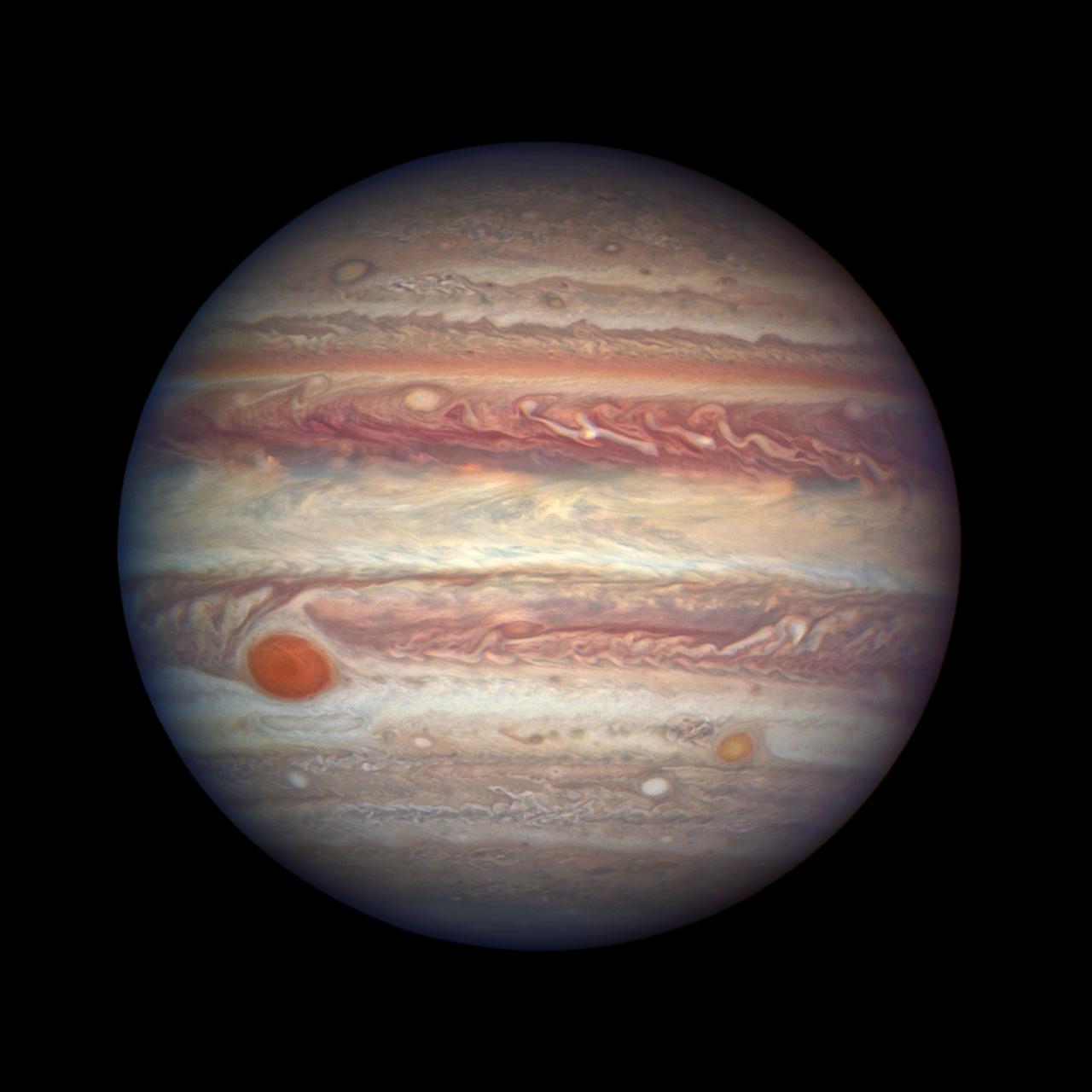
Ingo Swann coined the term "remote viewing," developed the coordinate-based protocol that became the foundation of the Stargate program, and was, as a viewer, genuinely unusual in ways the SRI researchers found difficult to categorize. The Jupiter session in 1973 is the most documented example of why they kept funding the work despite persistent pressure from skeptics.
The Setup
Harold Puthoff suggested an experiment that was, in a sense, perfectly designed: remote view a target nobody on Earth currently knows the details of, and see if the description matches what instruments later confirm. Jupiter was the target. NASA's Pioneer-10 spacecraft was en route and had not yet arrived. No human being had ever observed Jupiter up close. Swann could not have researched the correct answers because the correct answers did not yet exist in publicly available form.
The logic was elegant in its simplicity. Most remote viewing experiments suffer from what parapsychology critics call the "information leakage" problem. If a viewer describes a building in San Francisco, a skeptic can reasonably ask whether the viewer has been to San Francisco, seen photographs, or absorbed details unconsciously from prior exposure. With a planetary target, none of those objections apply. In 1973, the surface-level details of Jupiter were limited to what ground-based telescopes could resolve, and nobody had close observational data on the planet's finer features.
Puthoff and his co-researcher Russell Targ had been running experiments with Swann at SRI for approximately a year at that point. They had observed enough anomalous results to be interested but understood that any earth-based target would always leave room for conventional explanations. The Jupiter experiment was designed to close that gap. If Swann described features that later turned out to be accurate, and those features were unknown at the time of the session, the standard debunking toolkit would not apply.
What He Described
Swann described the planet's atmospheric bands, enormous cloud formations, and wind patterns — consistent with what telescopic observation had established. Then he described something unexpected: a ring around Jupiter.
He noted the ring with hesitation. He apparently wondered whether he had somehow drifted to Saturn by mistake. Jupiter, as far as anyone knew at the time, did not have a ring. A ring around Jupiter seemed like a clear error.
But the ring was not the only detail Swann offered. His session notes, which were recorded in real time and filed at SRI, included descriptions of massive storm systems with rotational dynamics, an atmosphere with distinct horizontal bands of varying color and texture, and what he called a surface that was not solid in any conventional sense. He described the planet as gaseous, with layers of increasingly dense material as one moved toward the core. He reported intense infrared radiation and described the planet as producing more heat than it received from the sun.
Several of these observations were broadly consistent with existing astronomical models. Others were more specific than anything ground-based observation had confirmed. Swann also described the planet's magnetosphere as being unexpectedly large and powerful, extending far beyond what he had anticipated encountering. He reported that the experience of viewing Jupiter was qualitatively different from viewing earthbound targets. The scale, he said, was disorienting.
What NASA Expected from Pioneer 10
Pioneer 10 launched on March 2, 1972, and spent 21 months in transit. It was the first spacecraft designed to travel through the asteroid belt and make a close approach to Jupiter. The mission was fundamentally exploratory. NASA scientists had models and predictions, but those predictions were built from telescope data gathered at a distance of roughly 400 million miles.
The scientific consensus in 1973 held that Jupiter was a gas giant with a turbulent atmosphere dominated by hydrogen and helium. The Great Red Spot had been observed telescopically for centuries, but its nature was debated. Some astronomers believed it was a permanent atmospheric feature; others thought it might be a surface feature visible through gaps in the clouds. The planet's radiation belts were expected to be significant but had never been directly measured.
What NASA did not expect to find was a ring system. Saturn's rings had been observed since Galileo, but Jupiter was not believed to have rings. No ground-based telescope had detected them, and no theoretical model predicted their existence. The idea of a Jovian ring was, in the early 1970s, considered unlikely enough that it was not listed among Pioneer 10's observational priorities.
What Pioneer 10 Found
Pioneer-10 passed Jupiter in December 1973. The ring Swann had described was later confirmed — though it took until Voyager 1's 1979 flyby for the finding to become widely accepted. Swann's session notes, which the SRI researchers had filed with some puzzlement, suddenly looked different.
Pioneer 10's data confirmed several things simultaneously. The planet's atmosphere was more dynamic and more layered than ground-based models had predicted. The radiation environment was far more intense than anticipated, nearly damaging the spacecraft's electronics. The magnetosphere was enormous, extending millions of miles into space. And the infrared measurements showed that Jupiter was, in fact, radiating approximately twice as much energy as it received from the sun. All of these details appeared in Swann's session notes, filed months before Pioneer 10's closest approach.
The ring confirmation came later and in stages. Pioneer 10's instruments were not optimized for ring detection, and the initial data was ambiguous. It was Voyager 1 in March 1979 that provided the definitive photographic evidence of a faint, thin ring system orbiting Jupiter. When the Voyager images were published, Puthoff reportedly contacted Swann and pointed out that the ring he had described six years earlier, the one that had caused both of them to wonder if the session had gone wrong, was real.
Specific Matches Between Swann and the Data
Proponents of the Jupiter session's significance point to several specific correspondences between Swann's descriptions and what the Pioneer and Voyager missions confirmed. The ring is the most dramatic, but it is not the only one. Swann's description of the atmosphere as layered, with bands of different density and composition, matched Pioneer 10's findings. His report of the planet generating its own heat was confirmed by infrared measurements. His description of the magnetosphere as unexpectedly powerful and extensive matched the data that nearly overwhelmed Pioneer 10's instruments.
Skeptics note that some of Swann's descriptions were general enough to match almost any gas giant, and that certain details (atmospheric bands, the Great Red Spot) were already known from telescopic observation. This is a fair objection. The question is whether the aggregate of Swann's descriptions, including the ring, the infrared radiation, and the magnetosphere characterization, constitutes a data set that exceeds what could be assembled from publicly available information in 1973. The SRI researchers believed it did. Critics have not been able to identify a published source from before the session that contained all of the specific details Swann described.
What the SRI Researchers Made of It
Puthoff and Targ were careful not to oversell the Jupiter session. In their published accounts, they presented it as one data point in a larger body of experimental work, not as proof of remote viewing. Puthoff, who had spent years at the NSA before moving to SRI, was acutely aware that a single session, no matter how striking, could not constitute scientific evidence by itself. What it could do was justify further investigation, and that is how they used it.
The session did, however, shape how the SRI team thought about the potential scope of remote viewing. If a viewer could accurately describe features of a distant planet, it raised questions about the mechanism involved. The standard models of information transfer, even the speculative ones involving quantum entanglement or nonlocal consciousness, had difficulty accounting for planetary-scale accuracy. Puthoff noted in later interviews that the Jupiter session was one of the cases that made him take the phenomenon more seriously as something that did not fit into any existing physical framework.
Targ, who was more willing than Puthoff to discuss the philosophical implications, has written that the Jupiter session convinced him that whatever remote viewing was, it did not obey the inverse-square law. Distance did not seem to degrade the signal. Whether the target was a building in Palo Alto or a planet 400 million miles away, the quality of the viewer's impressions did not appear to diminish. This observation, if correct, is theoretically significant, because it rules out any conventional energy-based explanation for the phenomenon.
Why This Case Endures
The Jupiter session is harder to dismiss than most remote viewing cases because the potential for conventional information leakage is much lower. With an earthbound target, a skeptic can always argue the viewer assembled the right answer from accessible fragments. With an unknown feature of a planet that had never been closely observed, that argument is not available. Swann's description of the ring preceded its confirmation by years. The confirmation came from independent physical observation by an unmanned spacecraft.
Fifty years later, the case remains part of the core evidence base for those who argue that remote viewing is a real phenomenon deserving of scientific study. It is also a case that illustrates the fundamental difficulty of psi research: a single session, even a remarkable one, does not constitute proof. It constitutes an anomaly. And the history of science is full of anomalies that turned out to have conventional explanations, as well as anomalies that turned out to be pointing at something genuine that the existing models could not account for.
What Swann described before Pioneer-10 arrived remains, fifty years later, genuinely unexplained. It is either one of the most remarkable coincidences in the history of experimental psychology, or it is evidence that the standard model of human perception is incomplete in ways that most scientists have not yet been willing to seriously investigate.

The Swann coordinate protocol — still available
PsionicAssist implements the coordinate-based method Ingo Swann and Harold Puthoff developed at SRI. Learn the same structured approach with weekly verified target sessions.
Begin Training →Intel Briefings
Stay in the signal: analysis of declassified research, remote viewing science, and new findings. No noise.